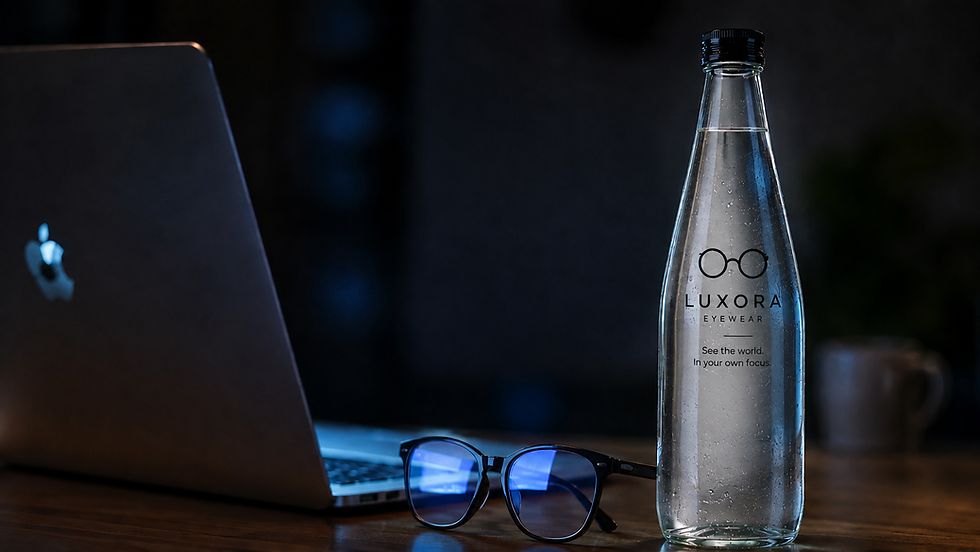
Sports Brands and Clubs Advertising in India

Quick answer: sports brand advertising in India isn't one problem, it's two very different ones depending on which side of that gap you're on. If you're selling into cricket, you're fighting outrageous ad inventory prices during a two month window every year. If you're selling into literally anything else, football, volleyball, badminton, golf, fitness equipment, general sportswear, you're fighting for scraps of attention the rest of the year with a much smaller budget. Neither problem gets solved by trying to out-shout the IPL. Both get solved by being genuinely present, year round, in the real spaces where each sport's actual community already gathers, which is exactly what Hydrobillboard is built for.

As of June 2026, the Indian Premier League is worth somewhere north of 15 billion dollars and earns roughly 125 crore rupees in revenue for every single match it plays, more per game than almost any sporting property on earth except the NFL. Broadcasting alone accounts for 60 to 70% of that number. Every big brand with a media budget wants a piece of it, and most of them get priced out trying.
Now picture everyone else. A volleyball club running weekend coaching in a school ground. A badminton academy with two courts and a waiting list of eleven year olds. A golf equipment brand watching membership fees at Delhi Golf Club sit on a waitlist that's been full for decades while it tries to sell a new set of irons to someone who hasn't even found a course yet. A cricket bat manufacturer in Meerut competing against a nearly identical looking bat selling for a third of the price two stalls down.
This is the actual shape of sports advertising in India. One sport pulls almost all the attention and almost all the money, and everything else, every other sport, every equipment brand, every club, every academy, is left figuring out how to be seen without that budget.
The manufacturing backbone almost nobody outside the industry has heard of

Before getting into advertising, it's worth knowing where Indian sports goods actually come from, because it changes how you think about the whole category. Meerut, genuinely nicknamed the sports city of India, hosts over 35,200 registered sports goods manufacturing units and accounts for roughly 40% of the country's total sports goods exports on its own. Jalandhar in Punjab adds another 3,000 plus units. Together these two cities produce somewhere between 75% and 82% of everything India makes in this category, cricket bats, footballs, hockey sticks, protective gear, gym equipment, badminton rackets, most of it.
India exported roughly 400 million dollars worth of sports goods in FY25, up nearly 8% from the year before, and the broader sports equipment and apparel market has been growing at a steady clip, projected past 40 billion dollars by 2027 in earlier industry estimates, with newer forecasts pushing that even higher as fitness culture, women's sports, and grassroots programmes like Khelo India keep expanding the base. Decathlon alone committed 111 million dollars to expand its Indian retail and manufacturing footprint. Nike, Puma, Adidas, and Crocs have collectively pledged around 2 billion dollars in Indian investment.
This is not a small, sleepy category waiting to be discovered. It's a large, fast growing one where almost all the advertising attention still flows toward a single sport.
Everyone this actually covers for sports brand advertising in india

It's worth naming the full range here, because "sports advertising" gets treated as a cricket conversation by default, and that's exactly the blind spot costing everyone else visibility.
Cricket equipment brands, the bat makers, glove manufacturers, and protective gear companies clustered around Meerut and Jalandhar, competing on craftsmanship in a market where a convincing fake is one stall away. Football and volleyball clubs and academies, riding real momentum from the Indian Super League and growing school level participation, but almost entirely dependent on word of mouth and local reputation rather than any real advertising budget.
Golf, both the equipment side, a genuinely fast growing 279 million dollar segment in 2026, and the club side, where membership at places like Bombay Presidency Golf Club or the Hyderabad Golf Association runs 17 to 60 lakh rupees with waitlists stretching for years, and where a brand new Noida course collected 50 crore rupees in membership fees before construction had even finished. Badminton, kabaddi, and hockey academies and leagues, sports with genuine, passionate followings that still get a fraction of the sponsorship dollars cricket commands.
Sportswear and apparel brands, both global names and homegrown Indian ones, fighting for shelf space and a share of a wardrobe that increasingly treats athletic wear as everyday clothing. Fitness and gym equipment manufacturers, riding the same health consciousness wave that's driving every category in this direction. And the women's sports ecosystem specifically, the Women's Premier League, women's football, badminton and athletics, genuinely gaining sponsorship and broadcast attention for the first time in a serious way, but still building the infrastructure that men's cricket built over decades.
Every one of these groups is solving some version of the same core problem, how to be remembered by the right community without competing directly with cricket for the same expensive inventory.
The counterfeit problem sitting inside every sports goods stall
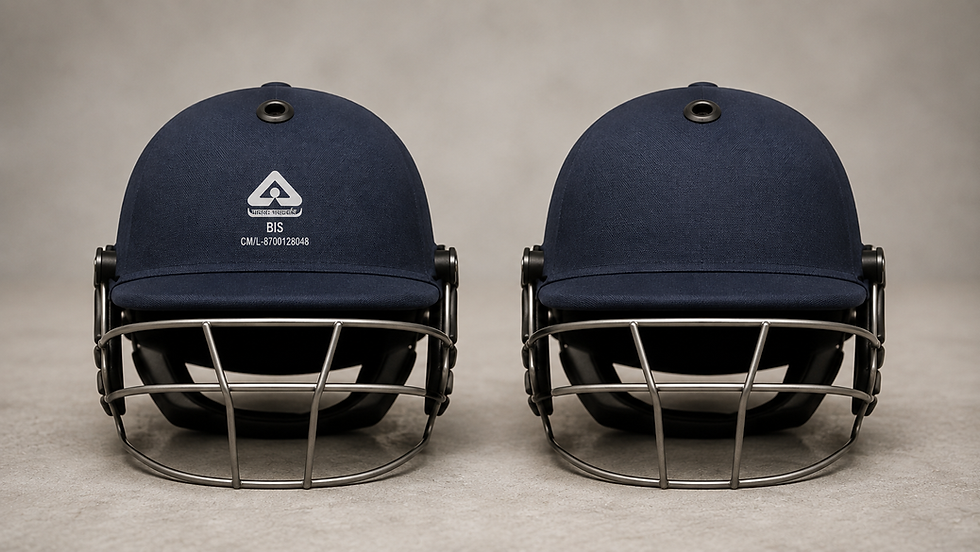
Here's a number worth knowing before spending another rupee on advertising a physical product in this category. A 2023 Ministry of Consumer Affairs assessment found that nearly 30% of sports goods sold through unorganised retail in India were counterfeit or simply non-compliant with safety standards. That's not a fringe issue confined to one product type, it's close to a third of what's sold outside organised retail.
The government has started responding directly. BIS certification became mandatory for select sports safety gear in 2023, starting with cricket helmets and chest guards, categories where a fake product isn't just a bad purchase, it's a genuine injury risk. Over 500 gear manufacturing units applied for that certification in the first year alone, which tells you two things at once, real compliance momentum is building, and there was clearly a large enough uncertified market beforehand to need fixing.
For a genuine brand, this is the same trust problem that's shown up everywhere else in this series, wearing sports gear instead of cosmetics or electronics. A buyer standing at a local sports goods stall, comparing a certified helmet against a nearly identical uncertified one at half the price, has almost no way to verify the difference on the spot. Advertising that just claims quality doesn't solve that. Advertising that's been genuinely, visibly present and trusted in that buyer's community for a long time does more of the actual work.
Where digital advertising for sports brands runs into a cricket-shaped wall

Ad inventory pricing spikes hardest exactly when non-cricket brands most need visibility. Digital and TV ad rates across sports-adjacent inventory climb sharply during IPL season, which runs roughly two months a year, pricing out smaller football, volleyball, or badminton brands trying to reach the same sports-interested audience at the exact time that audience is most engaged with sport in general.
Platform algorithms overwhelmingly favour cricket content, which means cricket-adjacent ads get cheaper, better placed reach almost by default. A football academy or badminton brand fighting for the same sports-interest audience segments is competing against an algorithm that's been trained on a dataset massively skewed toward one sport.
Seasonal visibility means most non-cricket sports brands only get attention during their own narrow tournament windows. A football brand is genuinely visible during ISL season and largely invisible the rest of the year, the same pattern repeats across badminton, kabaddi, and hockey, leaving long stretches where digital spend has almost no seasonal tailwind to ride.
Golf and premium club marketing faces the opposite problem, a tiny, hard to target, geographically scattered audience that most platforms aren't built to find efficiently. Targeting someone who can afford a 40 lakh rupee club membership is a fundamentally different, harder problem than targeting a mass sports audience, and most ad platforms are optimised for the latter.
Where traditional advertising fails just as clearly

Stadium and hoarding advertising inventory during major cricket windows is priced for national brands, not regional sports clubs. A local volleyball academy or badminton coaching centre has no realistic path into that inventory at any price point that makes sense for its actual customer base.
Print sports coverage skews so heavily toward cricket that other sports get a fraction of the column space, and their advertisers get an even smaller fraction of that. A football or hockey brand advertising next to editorial content that's 80% cricket is fighting for attention in a section the reader didn't open to read about football in the first place.
None of it reaches the actual community a club or academy depends on. A volleyball club's real customer base is parents within a few kilometres of the ground. A hoarding on a highway, even a cheap one, reaches almost none of them specifically.
What this actually looks like for someone running one of these brands

A father walking through a neighbourhood park with his son notices a bottle sitting on a bench, carrying a local football academy's name and its weekend trial schedule. He'd been meaning to find his son a sport beyond just screen time for months. He takes a photo of the QR code before they've even finished the walk.
A recreational cricketer, part of a weekend league that plays at the same municipal ground every Sunday, picks up a bottle near the boundary rope between overs. It carries a Meerut based bat maker's name and a small line about their local retailer. He's been meaning to replace a bat that cracked last season. He remembers the name specifically because he was standing exactly where cricket actually happens when he saw it, not scrolling past it in a feed.
A working professional at a premium gym reaches for water after a session, and the bottle carries a golf equipment brand's name alongside an invitation to a beginner's clinic at a nearby course. He's had a vague interest in taking up golf for a year, the kind of interest that never quite turns into action. The bottle showing up in a space he already associates with investing in himself is closer to the nudge that finally gets him to book a lesson than any ad he's scrolled past.
None of these moments competed with cricket for attention. They didn't need to. They showed up exactly where each specific sport's real community already was.
Matching the placement to the actual sport

Cricket equipment buyers are genuinely well reached near local maidans, municipal grounds, and the weekend league circuits where recreational cricket actually happens, not through generic sports-adjacent digital targeting. Football and volleyball academies do best in parks, near schools, and in housing society common areas, where parents are the actual decision makers even when the player is a child.
Golf equipment and premium club marketing fits naturally into upscale gyms, corporate co-working spaces, and business districts, matching the income profile the sport genuinely requires. Badminton, table tennis, and other individual sport academies are well served by housing society and community centre placements, where local, walkable convenience often matters more than brand prestige.
Fitness and gym equipment brands are obviously served by gyms themselves, one of the few placements in this whole series where the straightforward choice is also the correct one.
Side by side
Digital advertising | Traditional advertising | Hydrobillboard | |
Cost during cricket season | Spikes sharply, pricing out non-cricket sports brands during the exact window sports interest peaks | Same problem, stadium and hoarding inventory prioritises national cricket sponsors | Flat, unaffected by IPL season pricing, roughly from 15,000 to 50,000 rupees for a full campaign |
Reaches a specific sport's actual local community | Weak, platform targeting favours broad sports interest over hyper local, sport specific audiences | Weak, a hoarding reaches a general commuter audience, not a specific club's actual catchment | Strong, placement is chosen around exactly where that sport's real community already gathers |
Works for small clubs and academies, not just national brands | Rarely affordable at the volume needed to compete | Rarely affordable at all | Yes, entry pricing starts around 9,999 rupees for a 25 bottle pilot |
Consistent visibility outside a sport's own tournament season | Weak, most non-cricket sports see steep seasonal drop offs in relevant ad inventory and attention | Weak, same seasonal pattern | Strong, presence doesn't depend on a tournament window to make sense |
The honest version of this
Nobody outspends the IPL, and trying to is how a lot of smaller sports brands and clubs waste a marketing budget that could have worked much harder somewhere else. The actual opportunity isn't competing for the same national attention cricket already owns. It's being consistently, genuinely present in the much smaller, much more specific community that already cares about your particular sport, in the real places that community already spends time, long before and long after any tournament window makes headlines.
Frequently Asked Questions
Why is it so hard for non-cricket sports brands to advertise during IPL season in India? Digital and traditional ad inventory prices spike sharply across sports adjacent placements during the roughly two month IPL window, as national brands compete heavily for cricket audience attention, pushing costs beyond what most football, volleyball, badminton, or other sport specific brands can justify for the same period.
How big is the counterfeit problem in India's sports goods market? Substantial, a 2023 Ministry of Consumer Affairs assessment found close to 30% of sports goods sold through unorganised retail were counterfeit or non compliant with safety standards, which is part of why BIS certification became mandatory for select safety gear like cricket helmets and chest guards starting that same year.
Where does most of India's sports equipment actually get manufactured? Meerut and Jalandhar together produce an estimated 75% to 82% of India's sports goods, with Meerut alone hosting over 35,200 registered manufacturing units and accounting for roughly 40% of the country's total sports goods exports.
Does ambient media make sense for a small, local sports club or academy, not just national equipment brands? Especially for them, since the entry cost is low enough for a single location academy or club to genuinely afford, at a scale traditional stadium or hoarding advertising was never realistically available to them in the first place, and the placement itself can be matched precisely to that club's actual local catchment.