Plastic Pollution Effects On Environment

Updated: Jul 4
Quick answer: Plastic pollution continues to accumulate at scale globally, with the vast majority of plastic produced never being recycled. This has direct implications for marketing and packaging decisions, since brands that shift toward reusable materials like glass reduce their contribution to this waste while also signaling higher product and brand quality.

There is something quietly terrifying happening right now.Not in some distant future. Not in a science fiction film. Not in an environmental report that nobody reads past the first paragraph.
The effects of plastic pollution on our environment, our bodies, our soil, and the animals we share this planet with have already reached a scale that most people are not fully aware of. It is happening in the soil that grew your vegetables this morning. In the air moving through your lungs as you read this sentence. In the blood running through your veins right now. In the open garbage bins your city never seems to empty.
Plastic — the material that built the modern world — is now quietly dismantling it.
And the uncomfortable truth is that most of us already know something is deeply wrong. We just have not stopped long enough to understand exactly how wrong it has become — or how personally it has already arrived.
This is that story. With real numbers. Real consequences. Real sources. And a perspective that does not ask you to throw away your keyboard or your flip-flops — but does ask you to think more honestly about where plastic is genuinely necessary and where it simply is not.
The Scale of Plastic Pollution — Numbers That Are Difficult to Comprehend
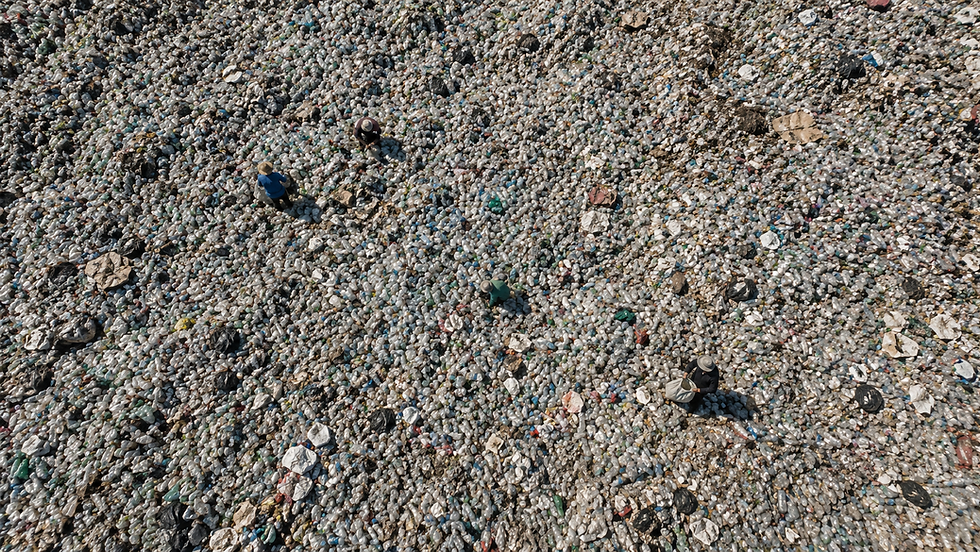
Without understanding the scale of this crisis, nothing else lands with the weight it deserves.
The world produced just 1.5 million tonnes of plastic in 1950. That number felt significant at the time.
Today, global plastic production exceeds 400 million tonnes every single year. By 2050, under a business-as-usual scenario, that figure is projected to reach approximately 1 billion tonnes annually. That is not a misprint. One billion tonnes. Per year.
Since 1950, humanity has produced a cumulative total of more than 8.3 billion tonnes of plastic. Of that staggering amount, only 9% has ever been recycled. Twelve percent was incinerated. The remaining 79% — the vast majority — is sitting in landfills, scattered across land, or floating in water bodies across the planet right now, as you read this. (Source: Science Advances)
Every single day, the equivalent of more than 2,000 garbage trucks full of plastic is dumped into the world's oceans. Not metaphorically. Literally. Two thousand trucks. Every. Single. Day. (Source: UNEP)
More than half of all plastic ever produced is designed for a single use. One use — then discarded. The planet holds the consequence indefinitely, because most plastic takes between 450 to 1,000 years to decompose in natural environments.
Think about that for one moment.
A plastic bottle used for twenty minutes at a café, a campus, or a park will exist on this planet for longer than entire civilisations have.
Glass, by contrast, is inert. It does not leach chemicals into its contents. It does not fragment into microplastics when it breaks down. It does not degrade into something more toxic than what it started as. A glass bottle refilled and reused every day is not just a better choice aesthetically — it is a categorically different relationship with the material world. One that removes something from the waste stream entirely and keeps it there.
That contrast — a few minutes of convenience against centuries of environmental consequence — sits at the heart of why this crisis is unlike almost any other humanity has ever created for itself.
How Plastic Pollution Effects On Environment and Destroys Soil — The Crisis Happening Under Your Feet

Most conversations about plastic pollution look outward — toward oceans, rivers, and skies. But the damage happening underground, in the soil that feeds every human being on this planet, is equally severe and far less discussed.
Agricultural soils worldwide are saturated with microplastics — tiny plastic fragments smaller than five millimetres, produced when larger pieces slowly break down under environmental pressure. Research from Murdoch University in Australia estimates that agricultural soils now contain approximately 23 times more microplastics than the oceans. (Source: Murdoch University) Twenty-three times more. In the ground. In the soil that produces the food currently on your plate.
The United Nations Environment Programme and the Food and Agriculture Organization have both independently confirmed that agricultural soils receive greater quantities of microplastics than marine environments. This is not a fringe finding from an obscure journal. It comes from the most credible global scientific and environmental institutions on earth.
How do microplastics enter our soil? Through plastic mulching films used to cover crops during the growing season. Through sewage sludge applied as agricultural fertilizer — which carries with it up to 300,000 plastic particles per kilogram. Through irrigation water contaminated upstream. Through rainfall that absorbs airborne plastic particles and carries them down into the earth. Every planting season adds more. Every year the accumulation deepens without recovery.
The documented consequences for soil are serious and compounding. Microplastics reduce soil porosity — the ability of soil to hold water and allow air to circulate through its layers, both of which are essential for healthy crop growth. They disrupt the communities of bacteria and fungi that make soil fertile in the first place. They alter how nutrients are absorbed by plant roots. They carry chemical additives including phthalates and bisphenols that leach into the surrounding soil, potentially contaminating both the crops growing in it and the groundwater systems running beneath it.
And once microplastics enter soil, there is currently no practical, scalable method to remove them. They simply remain. Accumulating season by season. Deepening year by year.
The land that feeds us is slowly becoming a landscape of invisible, permanent plastic contamination — and the food growing in it is carrying that contamination forward into every meal we eat.
How Plastic Is Killing Animals — India and Beyond
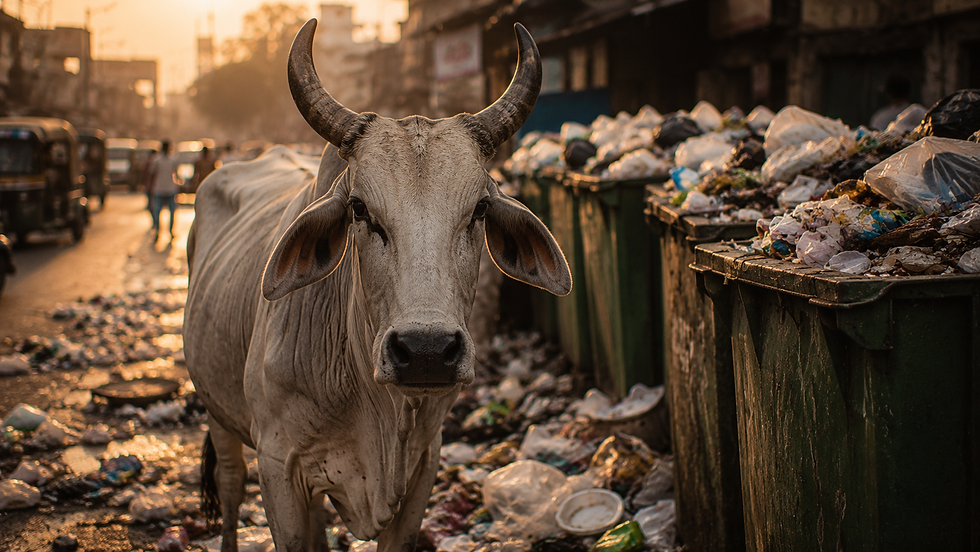
This is perhaps the most viscerally painful part of the plastic pollution crisis — because animals did not create this problem. They simply exist in the world we polluted, with no understanding of what plastic is or why it is everywhere.
In India, an estimated five million cows currently roam city streets. These animals, looking for food in an urban environment that offers them little else, regularly forage through open garbage bins overflowing with household and commercial waste. What they find — and eat — is not food. It is plastic bags carrying food residue. Wrappers. Bottles. Packaging. To a cow with no frame of reference for synthetic materials, the smell of food is enough.
The plastic they consume does not pass through their systems. It accumulates. It compresses. It hardens into solid masses that cannot be digested or expelled. In 2025, veterinarians in Chamarajanagar district alone performed emergency surgery on seven goats and five cows that had consumed plastic waste — and veterinarians in that region alone report seeing two to four such cases every single month. A pregnant cow brought to a rescue facility in Faridabad was found, after surgery, to have 71 kilograms of plastic, nails, and garbage compacted inside her stomach. Both the cow and her unborn calf died. (Source: Times of India)
The crisis extends beyond city streets and into forests once considered untouched.
A 2025 report from Coimbatore documented a female elephant found dead in a water body. Her post-mortem examination revealed she had died from consuming plastic waste. She was pregnant at the time of her death. Wildlife researchers in Karnataka's Brahmagiri hills subsequently released footage of significant plastic waste found clearly embedded in elephant dung — evidence that plastic pollution had penetrated forests that no human garbage bin exists anywhere near.
These are not isolated incidents worthy of a social media post and collective forgetting.
These are the daily, ongoing, and largely undocumented consequences of a world that has been treating plastic as something that disappears when we are done with it.
It does not disappear. It moves. Into the animals. Into the forests. Into the oceans. And as the next section makes clear — into us.
Microplastics in the Human Body — The Invisible Invasion Already Inside You
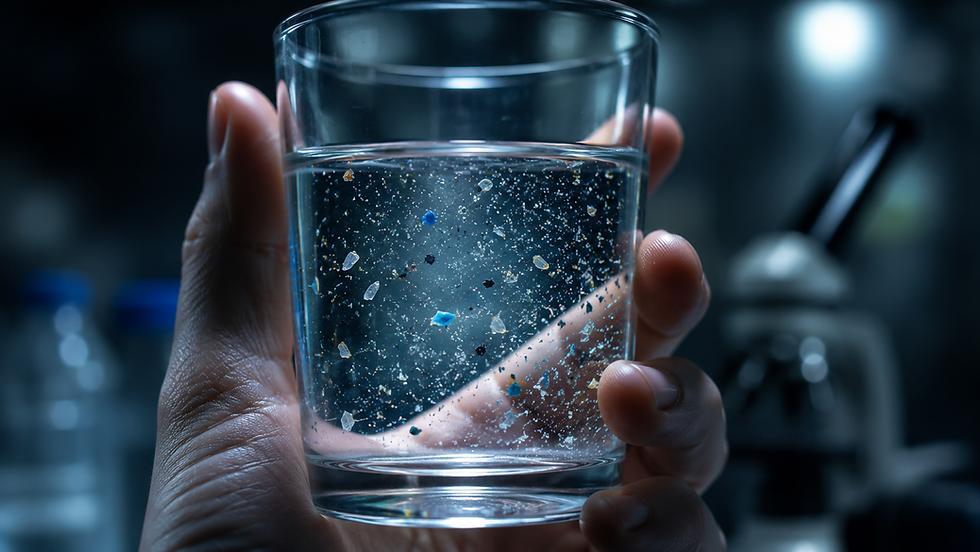
Here is where the story stops being about distant oceans or unfortunate animals and becomes deeply, uncomfortably personal.
Microplastics — fragments smaller than 5 millimetres — and nanoplastics, which are smaller still and invisible to the naked eye, have now been detected inside the human body. Not theoretically. Not as a projection of what might happen in future generations. Right now, in people alive today, in 2026.
They have been found in human blood. In lung tissue. In the placenta of pregnant women — meaning unborn children are already being exposed to microplastics before they take their first breath outside the womb. Research published in 2025 found microplastics present in higher concentrations in placentas from premature births than from full-term births, with researchers formally noting the possibility that plastic particle accumulation may be contributing to premature labour in some cases. (Source: Environment International)
It is estimated that people inhale approximately 68,000 microplastic particles every year through the air they breathe in typical indoor environments. Through food and water consumption alone, the average person ingests an estimated 39,000 to 52,000 microplastic particles per year — rising to as many as 121,000 per year when airborne inhalation is included across the full course of daily life. (Source: Environmental Pollution Journal)
These are not statistics from a single country. They reflect the global reality of a world where plastic has entered every environmental system that sustains human life — air, water, soil, and food.
How do microplastics enter the body? Through three primary and simultaneous routes: ingestion through food and water, inhalation through air, and absorption through skin contact. We eat them in seafood that has fed in contaminated waters. We drink them in both tap water and bottled water alike — the plastic bottle itself being a source. We breathe them in urban air and increasingly in rural air as well. And once inside, they do not simply pass through. They accumulate — in tissues, in organs, in blood vessels, in placentas, in brains.
A 2025 study using real-time imaging showed microplastics moving through the brains of mice, blocking blood vessels and triggering responses that researchers described as raising concerns about potential neurological consequences. (Source: Environmental Health Perspectives) A separate and expanding body of research has documented consistent associations between microplastic exposure and oxidative stress, chronic inflammation, immune system dysregulation, endocrine disruption, and DNA damage — though researchers appropriately note that definitive causal relationships in humans require continued long-term study.
What is already documented and verified in human research is this: microplastics are throughout our bodies. They carry chemical additives that act as endocrine disruptors — interfering with hormonal systems that regulate virtually every function in the human body from puberty to metabolism to stress response. They trigger inflammatory responses in tissues that were not designed to receive them. And they have been detected inside atherosclerotic plaques — the arterial build-up that is the primary driver of heart attacks and strokes globally. (Source: New England Journal of Medicine, 2024)
The World Economic Forum's Global Risks Report 2025 ranked pollution — explicitly including plastic and microplastic contamination — as a top 10 global risk. Not a future risk. A present, active, ongoing one. (Source: World Economic Forum)
The Health Consequences We Are Only Beginning to Understand

The direct health effects of plastic and microplastic exposure represent one of the most active areas of scientific research in the world right now. What is already established is concerning enough to warrant sustained, serious public attention.
Endocrine disruption. Many plastics contain chemical additives — BPA, phthalates, styrene, dioxins, and dozens of others — that mimic or directly interfere with the body's natural hormones. These chemicals have been consistently linked to disruption of reproductive systems, thyroid function, insulin regulation, and metabolic function. The endocrine system governs everything from puberty to blood sugar to immune response — and microplastics carry these disruptors into the body with every meal, every breath, and every sip of water.
Chronic inflammation and immune response. Once inside human tissue, plastic particles activate the body's immune defence systems. This inflammatory response, sustained over months and years of continuous low-level exposure, is associated with a wide range of serious chronic conditions including cardiovascular disease, autoimmune disorders, accelerated cellular ageing, and elevated cancer risk.
Cardiovascular effects. Microplastics have been detected and confirmed inside atherosclerotic plaques — the arterial build-up that is the leading driver of heart attacks and strokes. Research published in 2025 documented that microplastics in the bloodstream can induce cerebral thrombosis in animal models by causing direct cell obstruction and vascular wall damage. The implications for human cardiovascular health are a significant area of ongoing investigation.
Gut microbiome disruption. The human gut hosts trillions of microorganisms that collectively regulate digestion, immunity, mood, and systemic inflammation. Research across multiple institutions now suggests that microplastics can alter the composition of this microbial community, disrupt the integrity of the intestinal lining that prevents harmful particles from entering the bloodstream, and affect how the gut absorbs both nutrients and medications.
Respiratory damage. Airborne microplastics — inhaled continuously in urban, suburban, and increasingly rural environments — have been shown in peer-reviewed research to cause measurable detrimental effects on pulmonary physiology, with particular documented concern for people already living with asthma, chronic obstructive pulmonary disease, or other respiratory conditions.
Fetal and neonatal exposure. Microplastics have now been confirmed in placental tissue, in amniotic fluid, and in newborn meconium — meaning the earliest and most critical stages of human development are occurring in environments already contaminated with plastic particles and the industrial chemical additives they carry. The long-term developmental implications of this are not yet fully understood, which is precisely what makes them concerning.
The human body is resilient and remarkable. But it was not designed — over millions of years of evolution — to manage a constant and compounding intake of synthetic polymer particles carrying industrial chemical cocktails. The evidence of the strain that creates is accumulating in scientific literature steadily and without contradiction.
The Plastic Recycling Myth — Why the Chasing Arrows Symbol Is One of the Biggest Lies of Our Generation
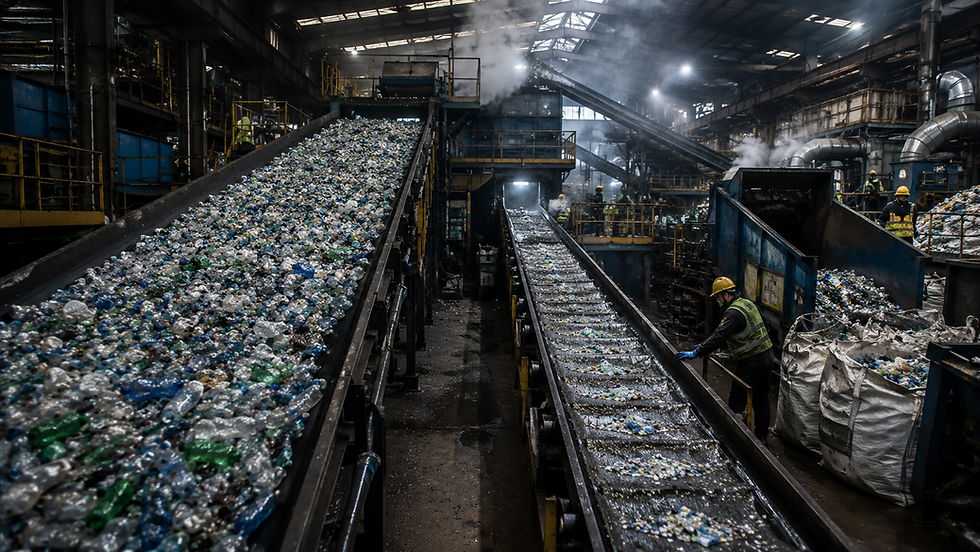
Here is a belief that most people hold with quiet, genuine confidence.
You finish a plastic bottle. You rinse it. You drop it in the recycling bin. You feel — reasonably and sincerely — like you have done the right thing. The little triangle of chasing arrows printed on the label seems to confirm it. This bottle will be recycled. It will return as something useful. The loop will close. Problem managed.
That belief is, for the most part, false.
And the people who designed the recycling symbol — and the industry that spent decades promoting it — knew it was largely false from very early on.
The numbers first — because they are stark:
Of all the plastic ever produced since 1950 — all 8.3 billion tonnes of it — only 9% has ever been recycled. In the United States, plastic recycling rates have actually been declining — dropping from 9.5% in 2014 to approximately 5 to 6% as of the most recent data available. That is not slow progress. That is measurable collapse. (Source: EPA)
A comprehensive 2025 Greenpeace USA investigation — one of the most detailed analyses of the plastic recycling industry conducted in recent years — found that only approximately one-fifth of the most commonly produced plastic types are recyclable in any meaningful, practical sense. The remaining majority either cannot be processed by existing recycling infrastructure, arrives contaminated beyond processing viability, or is simply not economically viable to recycle when the alternative — producing new virgin plastic from cheap fossil fuels — costs less. (Source: Greenpeace USA)
But here is what almost nobody knows — and it matters perhaps more than anything else in this entire piece:
Even the small fraction of plastic that does successfully enter and complete the recycling process does not come back in the same form. It comes back worse. And sometimes it comes back carrying more toxic chemicals than when it went in.
What recycling actually does to plastic:
Unlike glass — which can be recycled infinitely without any degradation in quality, purity, or performance — plastic is structurally incapable of circular life. Every single time plastic is collected, melted, and reprocessed, the molecular polymer chains that give it its fundamental properties begin to break apart. The material degrades. It loses structural integrity. It becomes progressively weaker, less flexible, more brittle, and less chemically stable.
To compensate for this inevitable degradation, manufacturers are required to blend significant quantities of virgin plastic — newly produced, petroleum-derived plastic — into the recycled material just to restore basic commercial usability. Recycled plastic does not replace virgin plastic production. It supplements it. The demand for new plastic from fossil fuels continues entirely regardless of what enters the recycling stream.
This process has a name in materials science and the waste industry: downcycling. And it is what the overwhelming majority of plastic recycling actually consists of. A clear PET water bottle becomes polyester carpet fibre. Carpet fibre eventually becomes composite plastic lumber. Plastic lumber eventually degrades beyond any commercial application and enters the waste stream permanently. At every stage of this process, the material loses quality. At every stage, it moves closer to the landfill it was always heading toward. The chasing arrows suggest a closed loop. The documented reality is a one-way slide toward disposal.
And then there is the contamination problem — which makes this considerably worse.
A peer-reviewed study published in the Journal of Chromatography A in November 2025, specifically examining PET plastic — the type most commonly used in food and beverage packaging, the bottles most people feel best about recycling — found that the recycling process itself measurably increases the concentration of toxic chemicals in the resulting recycled material. Not decreases. Increases. (Source: Journal of Chromatography A)
The mechanism behind this is important to understand. Plastic is porous and chemically persistent. Over its first life — as a bottle, a container, a food wrapper, a package — it absorbs chemicals from its contents and from its surrounding environment. Dyes. Flame retardants. Industrial lubricants. Pesticide residue. Food decomposition byproducts. When that plastic is then collected and melted down for reprocessing, those absorbed chemicals are not filtered out, removed, or neutralised. They are melted in. They become chemically integrated into the new recycled material.
Multiple independent studies supported by the Food Packaging Forum have confirmed that recycled plastics can contain over 100 distinct chemical contaminants — many with documented links to endocrine disruption, reproductive harm, developmental toxicity, and elevated cancer risk. What begins its life as food-grade virgin plastic ends its recycled life as an industrial-grade material carrying a chemical residue profile that no food safety regulator would approve for its original purpose. And if that recycled material ends up back in food packaging — which it sometimes does — those chemical contaminants end up in direct contact with what you eat. (Source: Food Packaging Forum)
Chemical recycling — the industry's newest promise:
As the documented failures of traditional mechanical recycling have become impossible to publicly ignore, the plastics industry has been heavily promoting a new technological solution: chemical recycling, also marketed as advanced recycling or molecular recycling. The pitch is genuinely appealing in concept — break plastic entirely down to its molecular building blocks and reconstruct it as new, high-quality material. A true closed loop.
The documented reality, verified by environmental researchers, independent analysts, and the Global Alliance for Incinerator Alternatives, is far less promising than the marketing suggests. Chemical recycling most often means converting plastic back into fossil fuel feedstock that is subsequently burned for energy. The process releases toxic air pollutants including dioxins and furans. It consumes enormous quantities of energy — often more than producing virgin plastic from scratch. It does not reduce or displace the production of new virgin plastic in any measurable way. Multiple independent analysts have concluded that chemical recycling, as currently implemented and scaled, is not recycling in any meaningful sense. It is a different form of high-temperature waste disposal, described with more optimistic and commercially convenient language.
Why did we believe the recycling myth for so long?
Because the industry invested decades and substantial financial resources ensuring that we would.
A Greenpeace investigation, corroborated by multiple independent journalism investigations using industry documents, found that for over 50 years the fossil fuel and plastics industry actively promoted and funded public recycling messaging — not because industry leadership genuinely believed recycling would solve the plastic waste problem at scale, but because it shifted moral and practical responsibility onto individual consumers and permanently away from producers. It gave hundreds of millions of people the feeling that the plastic crisis was manageable through personal behaviour. It successfully delayed meaningful regulation. And it protected the profitability of continued plastic production throughout.
The chasing arrows symbol was not born from a genuine engineering solution to plastic waste. It was born from a communications strategy designed to preserve a market.
This does not mean that recycling as a concept is without value. For metals, glass, and paper, recycling works effectively and at meaningful environmental scale. Glass can be recycled endlessly — into material of identical quality, purity, and safety. Aluminium loses almost nothing through recycling and can return to identical performance indefinitely. Paper can be cycled five to seven times before fibre degradation limits further use.
But for plastic — with its hundreds of distinct polymer types, its accumulation of chemical additives, its structural degradation through reprocessing, its contamination risks, and its fundamental economic disadvantage against cheaply produced virgin material — the recycling system as it currently exists is not solving the plastic pollution crisis.
It is providing sustained, comfortable cover for it.
The real solution, as environmental scientists, materials researchers, policy experts, and independent analysts consistently and repeatedly agree, is not better recycling infrastructure.
It is producing significantly less single-use plastic in the first place.
Plastic Pollution and Climate Change — A Connection the Industry Prefers You Do Not Make

Plastic pollution and climate change are not two separate environmental conversations. They are deeply, structurally connected — and the connection runs powerfully in both directions.
Plastic is derived from fossil fuels — specifically oil and natural gas. The full lifecycle of plastic, from raw material extraction through manufacturing, transportation, use, and disposal, generates enormous greenhouse gas emissions at every stage. In 2019 alone, the complete plastic lifecycle generated more than 850 million tonnes of greenhouse gas emissions globally. By 2050, if plastic production continues expanding along current trajectories, the plastic industry alone could consume up to 13% of the entire remaining global carbon budget — the total quantity of emissions the world can produce while maintaining any realistic chance of limiting warming to 1.5 degrees Celsius above pre-industrial levels. (Source: Centre for International Environmental Law)
Burning plastic — whether in industrial incinerators, in the informal open waste fires that are the de facto waste management solution across much of the developing world, or in the chemical recycling facilities described in the previous section — releases a documented cocktail of toxic compounds into the atmosphere. Dioxins. Furans. Polycyclic aromatic hydrocarbons. Heavy metals. These compounds cause direct and serious harm to human respiratory and neurological health and contribute to the ambient air pollution that the World Health Organization estimates kills approximately 7 million people globally every year. (Source: WHO)
The feedback loop in the other direction is equally concerning. Climate change — through rising temperatures, stronger storm systems, increased rainfall intensity, and rising sea levels — is accelerating the physical breakdown of plastic that already exists in ocean environments and on land. Warmer temperatures and increased ultraviolet radiation cause plastic to fragment into microplastics faster. Stronger storms and flooding carry plastic from inland environments — from bins, landfills, and streets — into waterways and ultimately into oceans at greater volumes. Climate change is accelerating the spread of the very pollution that plastic production is simultaneously contributing to.
The plastic crisis and the climate crisis are not parallel problems requiring separate attention. They are the same problem manifesting through different visible symptoms — and any serious engagement with one requires honest engagement with the other.
India's Particular and Urgent Relationship With This Crisis

India occupies a deeply uncomfortable position in the global plastic pollution story — one that demands honest acknowledgment rather than deflection.
According to rigorously documented data, India accounted for approximately 12.92% of global ocean plastic input — placing India as the second-highest national contributor to ocean plastic pollution in the world, behind the Philippines in some analyses and ahead in others depending on methodology. (Source: Science Advances) Accounting for population, India's plastic waste management infrastructure — waste collection systems, processing facilities, formal recycling capacity — is severely and demonstrably insufficient for the volume of plastic the country generates.
The Indian city is a precise and daily microcosm of every problem this piece has described.
The cows eating compacted plastic from overflowing bins on Delhi streets. The plastic waste carried from inland states by monsoon rivers into the Bay of Bengal and the Arabian Sea each year. The microplastics accumulating in the agricultural soils across Punjab, Haryana, Maharashtra, and every major farming state. The street dogs and urban wildlife rummaging through the unmanaged waste that lines the margins of every Indian city, consuming packaging alongside whatever food scraps they can find.
This is not a problem located somewhere else, on another continent, in another economy.
It is happening here. In every Indian city. Every day. At a scale that the country's current infrastructure and policy frameworks are not yet equipped to address at the pace the crisis demands.
A Note That Matters: This Is Not About Guilt. It Is About Honest Awareness.

This needs to be stated clearly, because conversations about plastic pollution have a tendency to drift into an accusatory register that is neither intellectually fair nor practically useful.
We are not saying you should throw away your keyboard.
We are not saying your flip-flops are destroying the planet.
We are not saying the electrical insulation in your walls, the casing of your phone, the pipes carrying water to your home, the dashboard of your car, or the medical equipment keeping people alive in hospitals and clinics are the problem.
They are not the problem.
Plastic, in a wide and genuine range of applications, is irreplaceable with currently available alternatives. It is lightweight, durable, hygienic, electrically non-conductive, and inexpensive to produce at a scale that makes many critical aspects of modern life possible. Keyboards. Medical devices. Surgical equipment. Helmets. Electrical insulation. Aircraft components. Water pipes. Eyeglasses. Cables. Life-saving drug delivery systems. These applications exist for defensible and important reasons, and none of them are the target of honest environmental criticism.
This is not about demonising a material. It never should have been.
It is about being rigorously honest about where the actual damage is coming from — and where practical, conscious choices genuinely can and do make a real and measurable difference.
The crisis is overwhelmingly driven by single-use plastic. Packaging designed and produced to be used for minutes before being discarded — and then to persist in the environment for centuries. Plastic bags used to carry groceries for ten minutes. Straws used for a few sips of a drink. Coffee cups lined with plastic film that makes them impossible to recycle through any existing system. Sachets containing a single serving. Wrappers around individual items already packaged. Bottles used once for twenty minutes and dropped.
Almost two-thirds of all plastic waste globally comes from applications with product lifespans of less than five years. Packaging alone accounts for 40% of all plastic waste generated globally. (Source: Our World in Data)
This is where the problem lives. Not in the plastic serving a genuine, lasting, structural, or medical purpose — but in the plastic we use once, for a few minutes, and send into a world that has no effective or honest mechanism for managing it at the volume we produce it.
The shift that matters is not about eliminating plastic from existence. It is about eliminating plastic from the places and applications where it simply does not need to exist — and where better, more honest alternatives are available right now.
Choosing a reusable bottle over a disposable one. Refusing a plastic straw when a paper alternative — or simply no straw — will serve the purpose equally well. Bringing a cloth bag to the market as a matter of habit. Choosing products packaged in glass or genuinely recyclable materials when that option exists and the cost difference is manageable.
These are not dramatic sacrifices. They are small decisions that, multiplied across millions of people and billions of daily moments, add up to something that genuinely changes the mathematics of production. When consumer demand for single-use plastic packaging consistently declines, production eventually follows. That is how markets respond to the people participating in them.
And here is something that is already quietly happening at the intersection of commerce and environmental conscience — something worth paying attention to.
Some brands have begun to understand that the physical object a person carries through their day — the bottle they refill every morning, the cup they bring to a client meeting, the container they use at the gym — is not simply a utility item. It is a signal. A daily, visible, repeated signal about how that person thinks about the world they inhabit. When businesses choose to associate their brand identity with objects that are reusable, durable, and made from materials that do not contribute to environmental degradation — glass, steel, natural materials designed to last — they are not simply making an environmental statement for a press release. They are placing themselves, literally, in the hands of the kind of people who have thought carefully about what they hold. That shift — in how forward-thinking brands approach physical presence in the world — is quietly one of the most interesting and commercially significant developments happening at the place where advertising, product design, and environmental responsibility intersect.
The Shift That Is Already Happening

Something real is changing — and the data confirms it is not marginal.
The global reusable water bottle market was valued at USD 8.75 billion in 2020 and is projected to reach USD 10.6 billion by 2025, growing consistently as consumer awareness of single-use plastic consequences deepens. (Source: Grand View Research)
McKinsey's 2025 research conducted across 11 countries found that 36% of Indian consumers are willing to pay significantly more for sustainable packaging — the highest figure of any country included in the study. (Source: McKinsey & Company) Indian consumers, of all people on earth, are among the most prepared and most willing to support this shift right now. That is both a commercial observation and a hopeful one.
The market for genuine alternatives to single-use plastic is growing because the awareness is growing. People are beginning to understand, at an increasingly instinctive level, that the disposable convenience of single-use plastic is not actually convenient when the true cost is paid in contaminated soil, suffering animals, plastic particles accumulating silently inside their own bodies, and a recycling system that does not deliver the responsible outcome it has spent decades promising.
The change does not require ideology. It requires information honestly presented.
And now you have it.
The Bottom Line
We have spent decades treating plastic as something that goes away when we are done with it.
It does not go away.
It breaks into fragments too small to see but too persistent to disappear. It enters the bodies of cows, elephants, and street animals searching for food in bins we left overflowing. It settles into agricultural soil and quietly undermines the fertility of the land that produces our food. It enters human bloodstreams and accumulates in tissues, triggering inflammatory responses in organs that were never designed to encounter synthetic polymer particles. It gets recycled into something that sounds responsible but often returns carrying more chemical contamination than before it was processed.
This is not a scare story constructed for emotional effect.
It is the current, documented, peer-reviewed, scientifically verified state of the planet we all live on — and the bodies we all live in.
What comes next does not require a dramatic gesture or a complete transformation of modern life. It requires a more honest, more informed relationship with a material — one that clearly distinguishes where plastic is genuinely necessary and irreplaceable, and where it is simply a deeply entrenched habit that the world has not yet found the collective will to honestly examine.
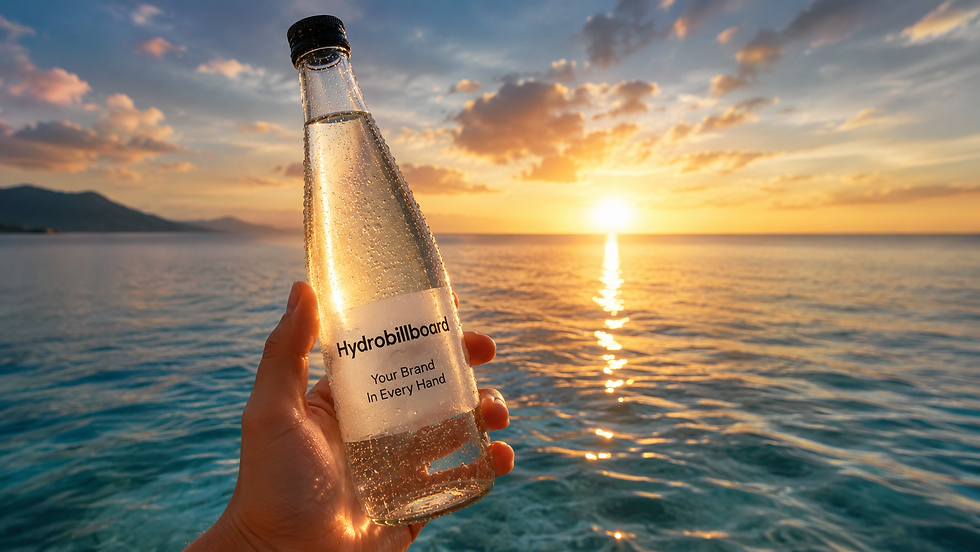
The plastic bottle your brand identity lives on. The wrapper around your lunch. The bag that carries your groceries home before being discarded.
These are the places where the damage accumulates.
And these are the places where the difference can genuinely be made.
In every hand, there is a decision.
What that hand holds — and what it says about the person, the brand, and the values behind it — matters more than we have ever been honestly told.
FAQ block:
How much of the world's plastic actually gets recycled? A small minority of the plastic ever produced has been recycled, with the majority ending up in landfills, incinerated, or in the natural environment.
Why should brands care about plastic pollution in their marketing choices? Consumers increasingly associate single-use plastic with lower brand quality, while sustainable materials like reusable glass are associated with higher perceived value.
Is glass a genuinely more sustainable alternative to plastic? Glass is reusable and infinitely recyclable without quality loss, unlike most plastics, which degrade in quality with each recycling cycle.
Can sustainable packaging choices actually influence brand perception? Yes — brands that visibly invest in sustainable materials are often perceived as more trustworthy and higher-quality by consumers.