Headphone and Speaker Advertising

Quick answer: headphone, earbud, and speaker advertising in India is fighting three separate battles at once, an industry that can't demonstrate its actual product through most of its own advertising formats, a counterfeit market so large it's genuinely eroding trust in real brands, and a regulatory compliance list (BIS, WPC, EPR) that most marketing never mentions even though buyers increasingly check for it. None of these get solved by a louder ad. They get solved by a brand that's genuinely, physically present somewhere real, which is exactly what Hydrobillboard does.
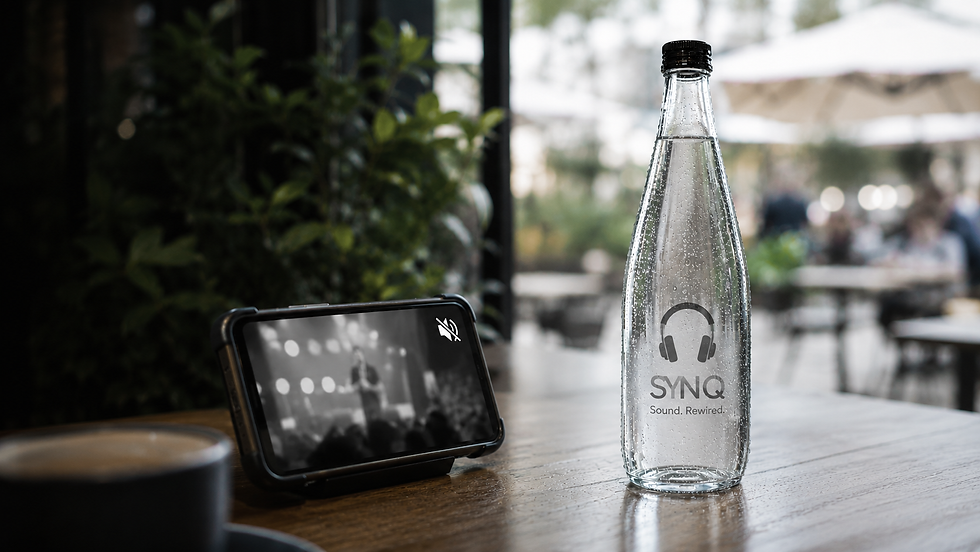
Most Instagram videos autoplay muted. Most people scroll with the sound off, in an office, on a bus, next to someone sleeping. Which means the single largest advertising channel for an entire industry built on how things sound is, for the overwhelming majority of impressions it generates, completely silent.
Sit with that for a second, because it's a genuinely strange problem, and almost nobody in the category talks about it directly. A headphone brand's whole pitch is "listen to this." Its main advertising channel is "look at this, no sound, please provide your own imagination.
The category that can't show its own product

Here's the actual scale of what's being fought over. India's earphone and headphone market is projected to grow at roughly 16% a year through 2034, reaching close to $24 billion. Wireless earbuds alone are expected to hit half a billion units sold globally in 2026, on their way past a billion by 2031. True wireless earbuds already dominate the category in India, driven by a smartphone base that's crossed a billion connections and a generation that treats earbuds less like an accessory and more like a permanent fixture.
And every one of those brands is trying to sell "sound quality" through channels that, by default, don't play sound. A video ad on mute shows a good-looking product and some on-screen text. It cannot show what a $10 fake and a genuine ₹2,000 pair of earbuds actually sound like side by side, which happens to be the single biggest thing separating them.
The counterfeit problem is bigger than most brands are willing to say out loud

This is the part of the industry that doesn't show up in glossy launch videos, and it's arguably the biggest single threat to every legitimate audio brand in India right now.
Unbranded and counterfeit headphones, sold heavily through Tier 2 and Tier 3 electronics stores and online marketplaces, routinely undercut genuine brands by 40% to 60%. Globally, fake premium headphones are estimated to account for roughly 12% of the total headphone market. Customs agencies have seized tens of millions of dollars worth of counterfeit earbuds in single operations, hundreds of thousands of units at a time, and that's just what got caught.
None of this is a footnote. It's a direct tax on every real brand's marketing spend, because a buyer who's been burned once by a fake "premium" pair, or who's simply seen a nearly identical-looking product for a third of the price, arrives at a genuine brand's advertising already primed to distrust the claim before they've even heard the product.
What almost nobody puts in headphone and speaker advertising, but every serious buyer eventually checks

Every wireless headphone, earbud, and Bluetooth speaker legally sold in India needs two separate certifications most marketing completely ignores.
BIS registration under IS 616:2017 has been mandatory since April 2021 for true wireless earphones, wireless headphones, TWS earbuds, and wireless neckbands, an electrical safety standard specifically meant to catch overheating, battery, and fire risks before they reach someone's ears. Separately, WPC ETA approval is required for the Bluetooth and wireless radio functions themselves, confirming a device isn't interfering with other frequencies or operating outside legal spectrum limits.
On top of both, EPR registration under the e-waste category ITEW17 is required, since wireless earbuds and headphones become genuine electronic waste at scale.
A counterfeit product skips all three, which is exactly how it manages to undercut a genuine brand by half. A brand that's actually compliant has almost no way, within a fifteen-second video ad, to communicate that difference to a buyer who doesn't even know these certifications exist. The compliance is real. The advertising channel to explain why it matters basically doesn't exist yet.
The health conversation the industry would rather not lead with

There's a second trust layer building quietly underneath all of this: prolonged earbud use has genuine, documented links to hearing strain, and it's becoming a real factor in how cautious buyers, and increasingly parents buying for teenagers, think about the category.
Nobody wants to lead a headphone ad with "this might damage your hearing if you're not careful," even though the World Health Organization's long-standing safe-listening guidance (roughly 60% volume for 60 minutes at a time) is exactly the kind of credible, practical information a genuinely trustworthy brand could be associated with, and almost none currently are.
That's not a reason to avoid the topic. It's an opening nobody's taken yet.
Where digital advertising for this category actually breaks

Most of the audience can't hear the ad in the first place. Autoplay-muted video is the default across nearly every major platform, meaning a headphone brand's core promise, how something sounds, gets delivered as silent visuals to most viewers, most of the time.
Spec sheets have become nearly identical across price points. "Active noise cancellation," "40-hour battery life," "IPX5 water resistance," every brand from the genuinely premium to the barely-compliant claims some version of the same list, so the claim itself has stopped differentiating anything.
Review and unboxing culture cuts both ways. Genuine creator reviews build real trust, but the same channel is flooded with paid, undisclosed "first impressions" content for products, including counterfeits, that don't hold up past the first week, training audiences to distrust glowing reviews on sight.
Retargeting struggles against a genuinely fast replacement and upgrade cycle. Earbuds get lost, damaged, or simply swapped for a newer model far more often than most electronics, which means a brand is constantly reacquiring the same customer instead of building the kind of long-term loyalty a category this personal should be able to earn.
Price-sorted marketplace listings make counterfeit competition worse, not better. A buyer scrolling a marketplace sorted by price sees a genuine ₹1,999 pair next to an unbranded ₹499 look-alike with no clear signal about which one has actually passed BIS and WPC certification.
Where traditional advertising fails just as badly

A hoarding, like a muted video, cannot demonstrate sound. The single most important thing about an audio product is the one thing a static printed board is structurally incapable of showing.
Retail counter displays get lost among a wall of near-identical boxes. Walk into any electronics retailer and the shelf of headphone boxes looks remarkably similar across a dozen brands, real and fake alike, which puts enormous pressure on packaging alone to do work it was never going to be able to do.
Print and outdoor reach the wrong moment entirely. The decision to buy earbuds is rarely made standing at a hoarding. It's made after a pair breaks, gets lost, or a friend recommends a specific model, moments a printed ad has no way of catching.
What Hydrobillboard actually offers a category built on demonstration it can't advertise

None of this gets fixed by a louder claim. It gets fixed by a brand being genuinely, physically present, in a way a buyer can actually verify, in the exact spaces where this category's real buyers already spend their time.
Commuters and students, the largest volume segment for budget and mid-range earbuds, are realistically reached at college campuses, transit-adjacent markets, and the cafés and hangout spots immediately around them.
Fitness-focused buyers, chasing sweat-resistant and sport-specific earbuds, are genuinely well matched to gyms and fitness studios, one of the few placements in this whole series where the obvious choice is also the correct one.
Gamers and gaming-headset buyers respond far better to gaming lounges, cyber cafés, and esports events than to a generic lifestyle placement that has nothing to do with why they actually bought the product.
Premium and audiophile buyers, comparing spatial audio and noise cancellation across two or three shortlisted flagship models, are best reached through co-working spaces and premium cafes, the same considered, research-heavy buyer this series keeps finding in similar spaces across other high-ticket electronics.
Party and portable speaker buyers, often shopping around a specific event, a birthday, a college fest, a weekend trip, respond well to placements near event venues and the same campus and market spaces where that buying decision actually gets discussed.
Every bottle carries geotagged, photographed proof of where it actually sat, which is a small but real answer to a category where "genuine" and "verified" have become genuinely contested words.
What this actually looks like, moment by moment

It's worth picturing this concretely, because the mechanism is simpler than most marketing plans give it credit for.
A college student is three episodes into a show on her phone, earbuds in, sitting at a cafe table near campus. She pauses, reaches for a glass bottle sitting on the table, and drinks. The bottle has a budget earbuds brand's name and a QR code etched into the glass, right at eye level, right as she's actively using a competing or aging pair of earbuds. She's not being shown an ad. She's holding one, at the exact moment her own earbuds are the thing on her mind.
A gym-goer finishes a set, pulls out a sweat-resistant earbud to answer a call, and reaches for water between sets. The bottle in his hand carries a fitness-audio brand's identity, sitting in the one environment where "will this survive my workout" is the actual question he's already asking himself. He's not being sold sound quality in the abstract. He's being reminded of a specific brand at the precise moment his current earbuds are proving whether they can handle exactly this.
A gamer between matches at a gaming lounge reaches for a bottle sitting next to his keyboard. It carries a gaming headset brand's name, right as he's mid-session, headset on, aware of every millisecond of audio latency in a way he wouldn't be anywhere else. That's not a coincidence of placement. That's the whole point of picking a gaming lounge over a generic cafe.
A working professional on back-to-back video calls in a co-working space reaches for water between meetings, headphones still around his neck because the battery just died mid-call. The bottle he picks up carries a premium noise-cancelling brand's name, at the exact moment his own pair just failed him in front of a client.
None of these four people clicked anything. None of them skipped an ad or scrolled past it muted. They drank water, the way they were always going to, and a brand name was already in their hand at the one moment that brand's whole pitch, "your current pair isn't good enough," was already true for them. That's the mechanism. Not a louder message. A better-timed one.
Side by side
Factors | Digital advertising | Traditional advertising (hoardings, retail displays) | Hydrobillboard |
Can demonstrate what the product actually does (sound) | No, most video plays muted by default | No, a static format can't carry sound at all | Indirect, but real-world presence and content build the credibility a silent ad can't |
Stands out against counterfeit competition | Weak, price-sorted listings put genuine and fake products side by side with little distinction | Weak, near-identical retail packaging blurs the line further | Stronger, verifiable geotagged placement is something a counterfeit seller has no reason to invest in |
Cost | Rising, with a fast device-replacement cycle forcing repeated reacquisition of the same customers | ₹1.5 lakh to ₹8 lakh+ a month for a decent metro hoarding | ₹9,999 for a 25-bottle pilot; full campaigns from roughly ₹15,000-₹50,000 |
Reaches the actual moment of need (lost, broken, or upgrading) | Partial, depends on timing and targeting | No | Indirect, but sustained presence builds familiarity that pays off whenever that moment hits |
Communicates compliance (BIS, WPC, EPR) that buyers increasingly check for | Rarely, most ad creative skips it entirely | Rarely | Not directly, but a consistently visible, trustworthy brand presence supports the credibility those certifications are meant to signal |
The quiet advantage
An industry that sells sound has spent most of its advertising budget on formats that can't make any. That's not a clever insight, it's just true, and it's exactly why the brands that show up consistently, in real places, in front of the right buyer, end up sounding more trustworthy than the ones shouting loudest through a muted feed.
A few questions worth answering directly
Why is BIS certification mandatory for wireless earbuds and headphones in India? Under IS 616:2017, mandatory since April 2021, BIS registration is an electrical safety standard specifically meant to catch risks like overheating, battery failure, and fire hazards before a wireless audio device reaches the market.
What's the difference between BIS and WPC certification for audio products? BIS covers electrical and product safety under the Compulsory Registration Scheme, while WPC ETA approval separately governs the Bluetooth and wireless radio functions, confirming the device operates legally within India's licensed spectrum without interference; both are required for the same product.
How big is the counterfeit problem in India's headphone and earbud market? Substantial, unbranded and counterfeit headphones commonly undercut genuine brands by 40% to 60% in price, and fake premium headphones are estimated to make up roughly 12% of the total global headphone market, with large-scale customs seizures reported regularly.
Does ambient media make sense for a product this hard to demonstrate through screens? Especially so, because the core problem digital and traditional advertising both share, an inability to demonstrate sound and a losing battle against counterfeit lookalikes, is exactly what genuine, verifiable, real-world presence is positioned to work around rather than compete with directly.