Automobile and EV Advertising in India

Quick answer: automobile and EV advertising in India spends most of its energy chasing a deadline that isn't really a decision, whether that's a subsidy cutoff, a festive-season discount, or a launch-week promotion, and then goes quiet the rest of the year. The actual buying decision for a vehicle takes months of research, comparison, and dealership visits regardless of any deadline. A brand that only shows up when there's a discount to announce is invisible for most of the actual decision.
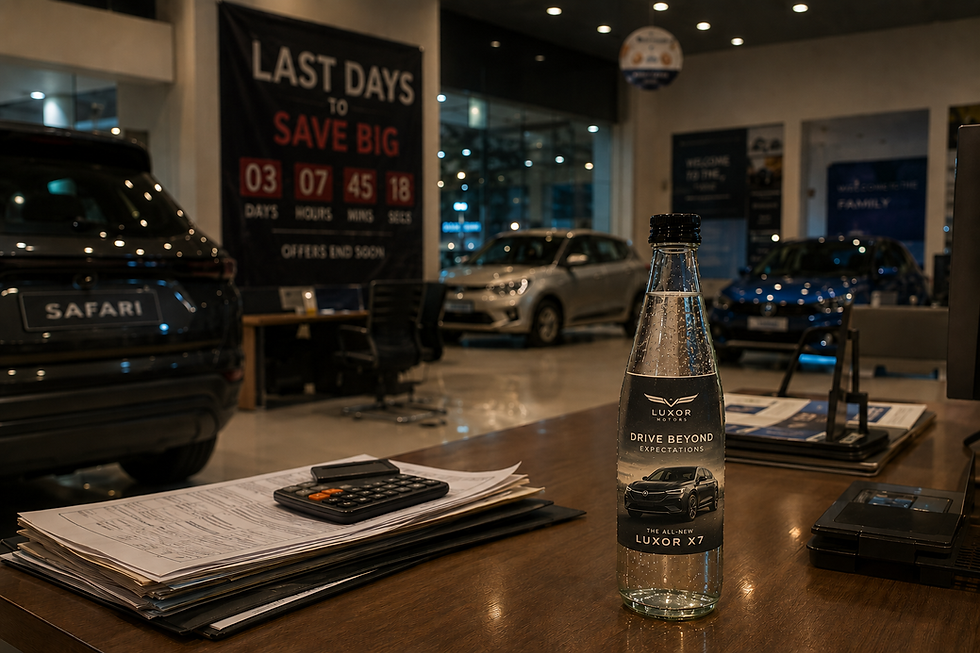
There's a particular kind of noise a showroom makes in the last week of a subsidy deadline. Sales staff on the phone with three customers at once. A finance officer running numbers on a calculator instead of waiting for the software to load. Someone's uncle, brought along specifically to "just make sure the paperwork is right," reading the fine print on a tablet screen while a toddler runs laps around a parked scooter.
That was more or less the scene across Indian EV dealerships in the closing days of March 2026, as the PM E-DRIVE subsidy raced toward its original deadline. Electric two-wheeler sales hit 1.39 lakh units that month, one of the strongest on record. Then April happened. Industry data from the last time this exact pattern played out, when FAME-II wound down in 2024, showed e-2W sales falling 53% the very next month. Not a slow decline. A cliff.
A subsidy that keeps almost running out
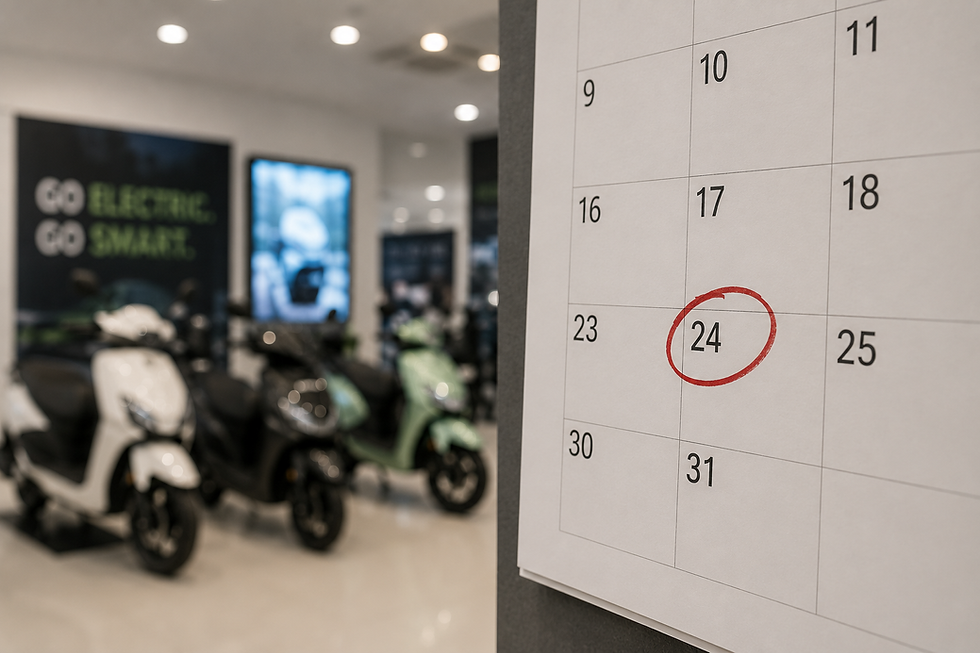
Here's where it gets specifically strange for 2026. The PM E-DRIVE scheme, a ₹10,900 crore programme covering electric two- and three-wheelers, buses, and charging infrastructure, was originally supposed to stop offering purchase incentives on two-wheelers by 31 March 2026. It got extended to 31 July 2026 instead. By mid-June, dealers were being told to submit pending subsidy claims quickly because the scheme's allocation, a fixed target of roughly 24.7 lakh subsidised vehicles, was close to being used up entirely. As of this writing, the scheme sits right at that edge again.
Which means an entire industry has now lived through this exact anxious countdown twice in two years. The subsidy itself has also been quietly shrinking the whole time, from roughly ₹10,000 per kWh under the original scheme down to ₹2,500 per kWh, capped around ₹5,000 per vehicle. Depending on battery size, that could mean prices climbing 20 to 40% for some models once the incentive fully disappears.
Every EV brand knows this. And the marketing response, almost without exception, has been to lean harder into deadline urgency. "Buy before the subsidy ends." Countdown banners. Dealer-floor hoardings with a date circled in red. It works, in the narrow sense that it moves inventory in the final weeks. It's also exactly the kind of campaign that produces a 53% crash the month after, because it never built a customer relationship that outlasts the discount. It built a transaction.
This is not only EV story
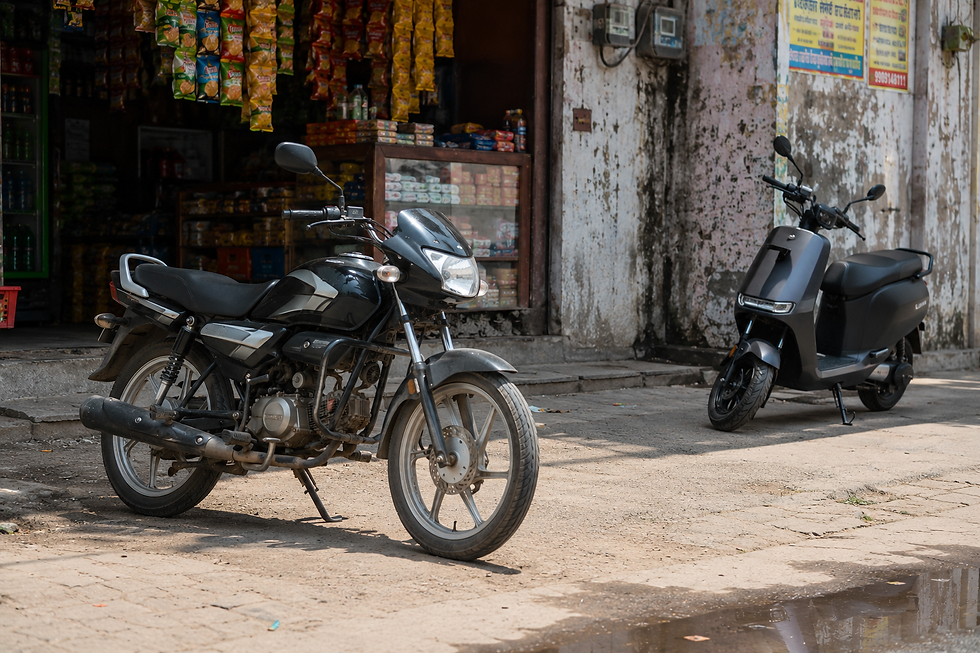
It's easy to read all of this as an electric-vehicle problem, because EVs are where the subsidy drama lives. They aren't where most of the market actually is. In June 2026, electric two-wheelers still made up only around 6.5% of total two-wheeler sales nationally, and even Hero MotoCorp, the country's largest two-wheeler maker by volume, saw EVs account for barely 4.6% of its own sales that month. The Hero Splendor alone, a plain, petrol, entry-level commuter motorcycle, sold over 3 lakh units in a single month in early 2026. That one model outsells most entire EV brands combined.
So this covers a wider field than "EV marketing," and every part of it has the same underlying advertising problem, just dressed differently:
Entry-level and commuter motorcycles (the Splendors, the HF Deluxes, the 100–125cc segment that's still the actual backbone of Indian two-wheeler transport), sold almost entirely on trust in reliability and resale value built up over years, not a single campaign
Premium and performance motorcycles (Royal Enfield, Bajaj's Pulsar and Dominar lines), where brand identity and community belonging matter as much as the spec sheet, and where growth has been genuinely strong, Royal Enfield's Classic 350 alone climbed over 40% year-on-year recently
Electric two-wheelers, scooters far more than motorcycles so far, since the electric motorcycle segment specifically has lagged well behind electric scooters in adoption
Hatchbacks and sedans, the segment losing share to SUVs but still the entry point for most first-time car buyers
Compact and mid-size SUVs, the fastest-growing car body style in the country right now
Premium and luxury cars, a smaller volume segment but one where brand perception does almost all the work before a customer ever asks about price
Passenger EVs, still a small share of the four-wheeler market (around 7.7% as of mid-2026) but growing quickly off that small base
Certified pre-owned and used-vehicle dealers, for both cars and motorcycles, fighting a credibility battle that's completely different from a new-vehicle showroom's problem
Commercial and fleet vehicles, where the buyer is often a business owner or fleet manager making a cost-of-ownership decision, not an emotional one
The common thread across every one of these: almost all of them are still marketed with the same two tools, a discount-driven push around a deadline, and a spec-sheet claim that competitors can copy within a week. Almost none of them are marketed around the quiet, months-long stretch where a buyer is actually deciding who to trust.
The part of the buying energy nobody is actually advertising to
A car or an EV purchase in India isn't decided in a showroom. It's decided somewhere in the weeks before that, across a scattered, unglamorous research process: a YouTube review watched at 11pm, a Reddit thread about a specific model's real-world mileage, a cousin's opinion on whether a particular brand's after-sales service is any good, a spreadsheet comparing on-road prices across two or three dealerships.
By the time a family actually walks into a showroom, they've usually already narrowed the field to two or three names. The showroom visit is closer to a confirmation than a discovery. And almost none of the industry's marketing budget is spent on that earlier, quieter stretch, the part where the shortlist actually gets built.
Where digital advertising actually breakdowns for automobile EV advertising
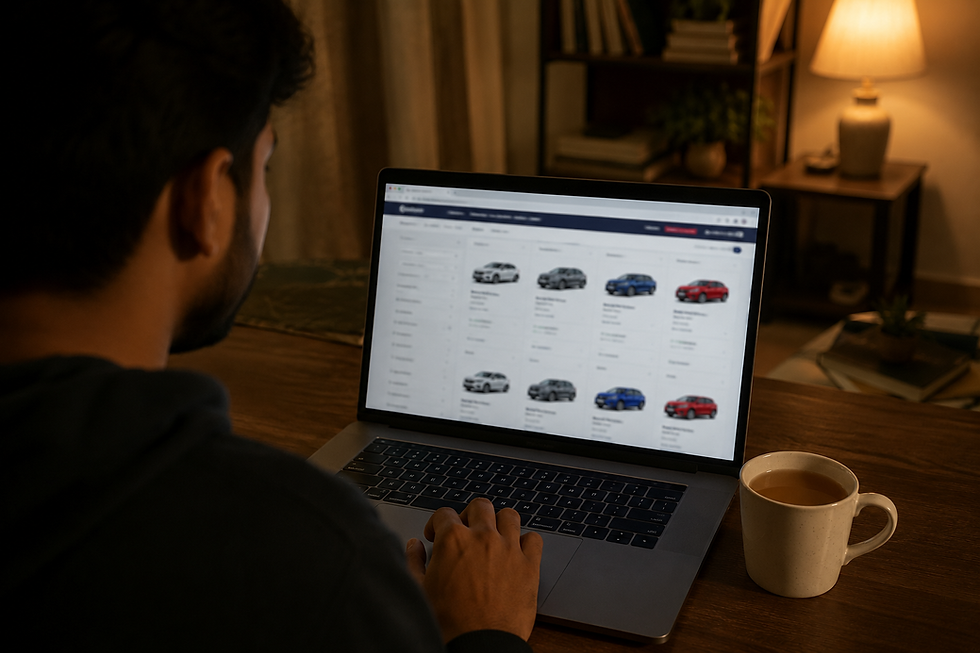
The purchase cycle is longer than any retargeting window is built for. Vehicles get replaced every four to seven years on average. By the time someone's genuinely in-market again, a platform's ad algorithm has usually "forgotten" them entirely, and rebuilding that targeting from scratch costs the same as acquiring a brand-new customer.
Attribution barely survives contact with how people actually shop. Someone clicks a Facebook ad, then researches for six weeks almost entirely offline, through YouTube, dealership visits, and word of mouth, before eventually buying from a showroom that has no idea the original ad ever mattered. The platform reports the click as unconverted. The dealership has no record the ad existed. Nobody in the funnel gets credit for the sale that actually happened.
The claims that decide a sale increasingly can't be made through a screen. Safety rating, real-world mileage or range, resale value, how the interior actually feels after a year of use, these are exactly the things a thirty-second video can assert but never really prove. Buyers have learned to distrust the assertion and go find the answer themselves, from a source the brand doesn't control.
Lead quality on dealer-generated digital campaigns is notoriously weak. A large share of leads captured through lead-form ads and comparison-site listings are early-stage browsers, students filling in forms out of curiosity, or people comparing five brands at once with no near-term intent, leaving sales teams chasing a long list of names that mostly never convert.
Rising costs are chasing a shrinking share of genuinely new attention. Every major brand runs some version of the same targeting, the same retargeting sequence, the same comparison-page SEO strategy, which means the cost of standing out keeps climbing while the actual differentiation between competing campaigns keeps shrinking.
Where traditional advertising fails
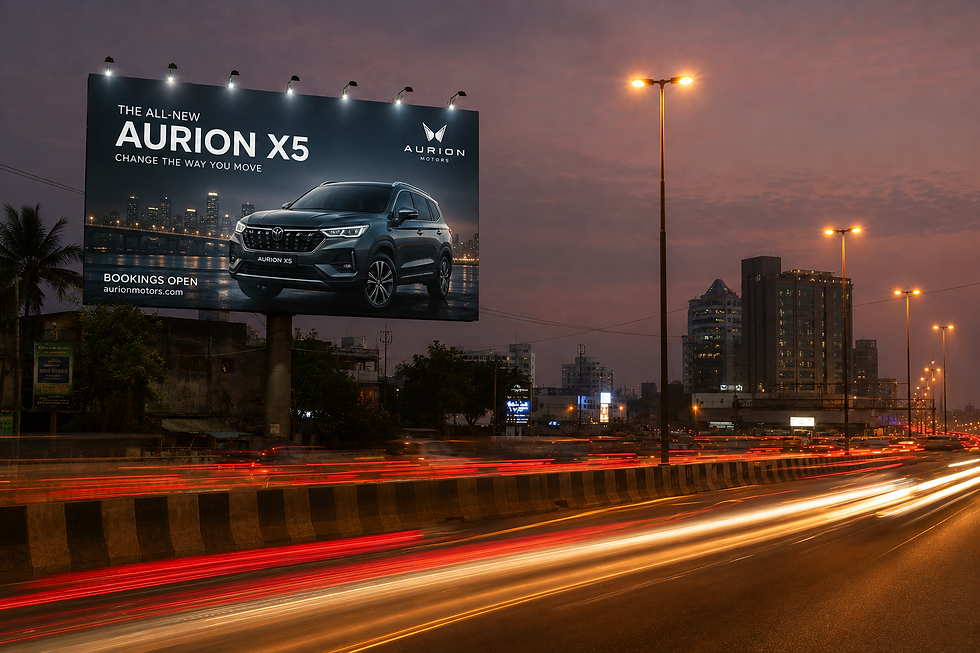
A hoarding reaches whoever's nearby, not whoever's deciding. Most people driving past a highway hoarding on any given day aren't shopping for a vehicle that month. The format was built for mass reach in an era before anyone could target intent at all.
It can't demonstrate the specific things that now matter most. A Bharat NCAP score, a real charging-time number, how a motorcycle's engine actually sounds at idle, none of that survives translation onto a static printed board, no matter how well-designed.
Dealership footfall events can't separate serious buyers from casual browsers. A showroom open day pulls in a mix of genuine shoppers, curious neighbours, and people killing an hour, and there's no reliable way to tell the difference until a salesperson has already spent twenty minutes with the wrong person.
Print and radio reach keeps shrinking against a buyer base that's moved almost entirely online for research. Newspaper automotive sections still carry some credibility with an older, more affluent readership, but they're expensive relative to a shrinking audience, and they barely touch the younger, mobile-first buyers driving growth in scooters, entry motorcycles, and compact SUVs.
None of it survives the deadline it was built around. A subsidy-countdown hoarding or a festive dealer banner has a shelf life measured in weeks. Once the discount ends, the campaign has nothing left to say, and the brand goes quiet exactly when a slower, more considered buyer might finally be ready to act.
Safety became a real conversation, and most advertising hasn't caught up
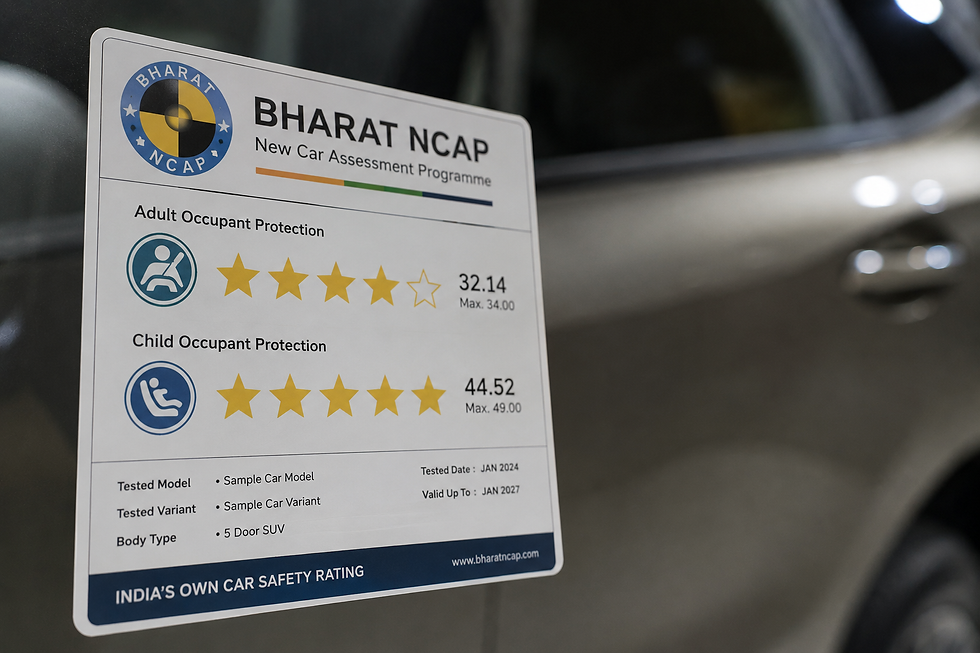
Something genuinely shifted in how Indian buyers think about cars over the past few years, and it's worth naming directly: safety used to come up mostly after a bad accident, someone's cousin, a viral crash video. Now it's a spec people actively check before they book a test drive.
Bharat NCAP, India's own crash-test programme launched in 2023, has already tested more than 30 cars by 2026, and its ratings show up constantly in comparison threads and YouTube reviews now. It's worth knowing one detail almost no marketing content mentions: Bharat NCAP's frontal test runs at 56 km/h, while Global NCAP's runs at 64 km/h, so a car can score differently across the two programmes depending on which one it was actually tested under. A buyer who's done their homework knows this. A brand whose ad copy just says "5-star safety" without specifying which programme, and which exact variant, is talking to a more skeptical audience than it thinks.
There's a quieter regulatory wrinkle on the EV side too. Finished electric vehicles are taxed at 5% GST, while a lot of the raw materials and components that go into building them are taxed at 18%, an inverted structure that squeezes manufacturer working capital in a way that has nothing to do with marketing but everything to do with why some EV pricing feels unstable from one quarter to the next. It's not something a buyer needs to know. But it's part of why "just wait for prices to drop" has become such common, damaging advice in EV-buyer forums, and why brand trust matters more in this category than a single festive discount can fix.
What Hydrobillboard actually does in this specific mess, and why it works where the other two don't
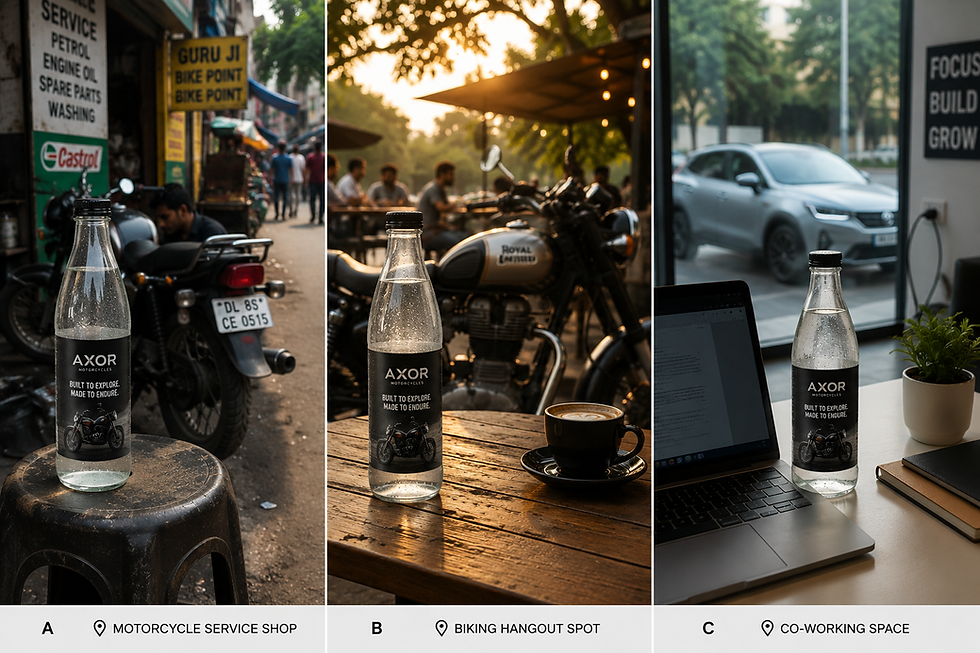
None of the problems above are solved by shouting louder during the subsidy countdown. They're solved by being genuinely present during the months a buyer is quietly building their shortlist, before they've picked a dealership, before there's any discount to react to. That's the entire advantage, stated plainly: Hydrobillboard doesn't compete with digital and traditional advertising on their own terms, because it isn't trying to catch a buyer at the moment of intent. It's building the familiarity that decides which two or three brands even get considered once that moment arrives.
Hydrobillboard places branded glass bottles, geotagged, professionally photographed in their real placements, into the physical spaces where a specific vehicle segment's actual buyer already spends time. And the placement has to match the buyer, not a generic "young and online" assumption applied to every vehicle category equally.
Entry-level and commuter motorcycle buyers are overwhelmingly working-class or first-jobber riders with tight budgets and long brand memory, best reached near local markets, bus stands, and service-centre clusters, the everyday commercial strips this buyer actually passes through, not a premium urban lifestyle spot they'd never visit.
A first-time electric scooter buyer, often a student, a gig-economy rider, or someone commuting to a first job, is realistically reached at college campuses, near coaching centres, and in the same local markets and bus-stand areas.
Premium and performance motorcycle buyers (Royal Enfield, Pulsar, Dominar riders) skew toward community and identity as much as spec sheets, and respond well to placements near biking cafés, weekend riding routes, and gyms, spaces this rider already treats as part of their identity, not just their commute.
A family SUV or hatchback buyer, usually a household decision spanning two generations, is better reached in neighbourhood parks, housing-society common areas, and the kind of weekend market visit where multi-generational shopping decisions actually get discussed out loud.
A premium EV or luxury sedan buyer, often a founder or senior professional making a considered upgrade, is realistically found in co-working spaces, premium gyms, and business-district cafés.
A used-vehicle or certified pre-owned buyer, price-conscious and often more skeptical of brand claims than any other segment, responds better to placements near service centres and local commercial areas where "genuine" and "verified" already carry real weight.
A fleet or commercial-vehicle buyer is a business decision-maker, not a consumer, so placements near transport hubs, logistics parks, and business districts reach the actual person signing the purchase order.
Get that matching wrong, and a placement can be technically delivered while reaching almost nobody who was ever going to buy that vehicle. Get it right, and a brand becomes a familiar name to exactly the people quietly building their shortlist, months before any subsidy countdown or festive banner ever enters the picture.
Where this actually lands, side by side
Factors | Digital advertising | Traditional hoardings and dealer events | Hydrobillboard |
Reaches buyers during the real research phase (weeks before a showroom visit) | Partially, but attribution across a long, multi-channel research process is weak | Rarely, a hoarding glance doesn't map to a multi-week comparison process | Yes, sustained presence through the exact stretch where a shortlist gets built |
Cost | Rising steadily; retargeting a 4-7 year purchase cycle means a lot of wasted spend on people who already bought elsewhere | ₹1.5 lakh to ₹8 lakh+ a month for a decent metro hoarding, concentrated around launch and festive windows | ₹9,999 for a 25-bottle pilot; full campaigns from roughly ₹15,000-₹50,000, running continuously rather than in bursts |
Survives a subsidy deadline passing | No, deadline-driven campaigns lose their entire reason to exist the day the subsidy ends | No, the same problem | Yes, the campaign was never built around the deadline in the first place |
Demonstrates real-world detail (safety score nuance, actual range, interior feel) | Weak, a video can claim it but can't really prove it | None | Indirect but genuine, sustained real-world presence and content build the kind of familiarity a single ad can't manufacture |
The honest version of the pitch
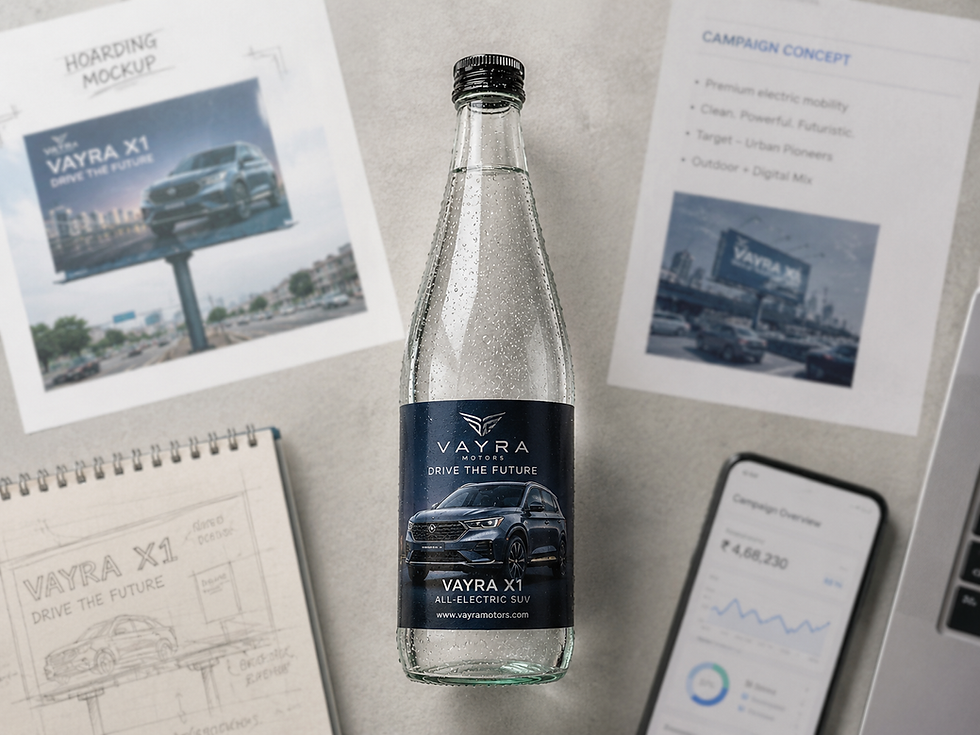
None of this makes the subsidy cliff or the festive discount go away. Those are real, and they'll keep moving real volume in the weeks they're active. But a brand that has spent the previous eleven months being genuinely, quietly present in the right buyer's daily life walks into that discount window with something a competitor who just started advertising that week doesn't have: a name the buyer already half-trusts.
That's the difference between a 53% crash the month the incentive disappears and a brand that keeps selling on its own reputation once the discount stops doing the talking for it.
A few questions worth answering directly
Why did EV two-wheeler sales crash after the last subsidy deadline? Sales surged in March 2026 as buyers rushed to book before the PM E-DRIVE incentive was originally set to end, then fell sharply the following month once the urgency disappeared, echoing a similar 53% drop seen after FAME-II wound down in 2024, a pattern typical of demand pulled forward by a deadline rather than genuine sustained brand preference.
Is the PM E-DRIVE subsidy still available in 2026? It was extended from its original 31 March 2026 deadline to 31 July 2026, though by mid-2026 the scheme's fixed allocation target was close to being fully claimed, meaning availability could end before the extended date depending on remaining funds.
Why does Bharat NCAP sometimes give a different rating than Global NCAP for the same car? The two programmes test at different speeds, Bharat NCAP's frontal test runs at 56 km/h versus Global NCAP's 64 km/h, so scores aren't always directly comparable across the two even for the same model.
Does ambient media make sense for a purchase as infrequent as a car or EV? Especially for infrequent, high-consideration purchases, because the brand that's already familiar by the time a buyer starts seriously comparing options has a real advantage, and that familiarity has to be built over months, not during the two-week window when a deadline or discount is actively running.
Is this only relevant for EV brands, or does it apply to petrol motorcycles and cars too? It applies more broadly than EVs alone; electric two-wheelers were still only around 6.5% of total two-wheeler sales in mid-2026, meaning the overwhelming majority of the market, entry-level commuter motorcycles, premium bikes, and petrol cars, faces the exact same long-research, short-campaign mismatch that EV brands do, just without a subsidy deadline forcing the issue into the open.
Why do commuter motorcycles like the Hero Splendor sell so well without heavy digital advertising? Decades of accumulated trust in reliability, fuel efficiency, and resale value do most of the work, which is itself the strongest argument for building brand familiarity over a long period rather than relying on short bursts of campaign spend around a launch or a discount.