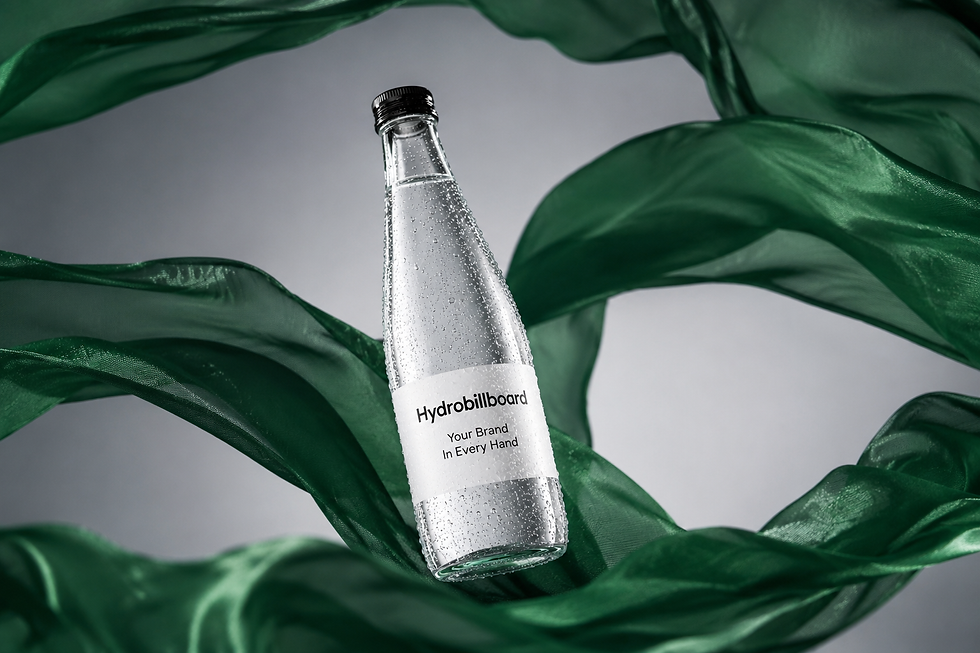
Why Glass Feels More Premium Than Plastic — And Why It Matters for Modern Brand Marketing
- Hydrobillboard Editorial

- May 24
- 7 min read

There is a moment almost everyone has experienced but rarely stopped to think about.
You pick up two bottles of water. One is plastic. One is glass.
Before you taste anything. Before you read a single word on the label. Before the price even registers in your mind — something has already happened.
You have already formed an opinion about which one is better.
That split-second judgment is not accidental. It is not shallow. And it is certainly not random.
It is one of the most fascinating and commercially powerful things happening in consumer psychology right now — and brands that understand it are quietly building some of the most loyal audiences in the market.
This is the full story of why glass feels more premium than plastic, what science and research say about it, and why it matters more than ever for modern brand marketing.
The World Chose Plastic for Convenience — Not for Quality
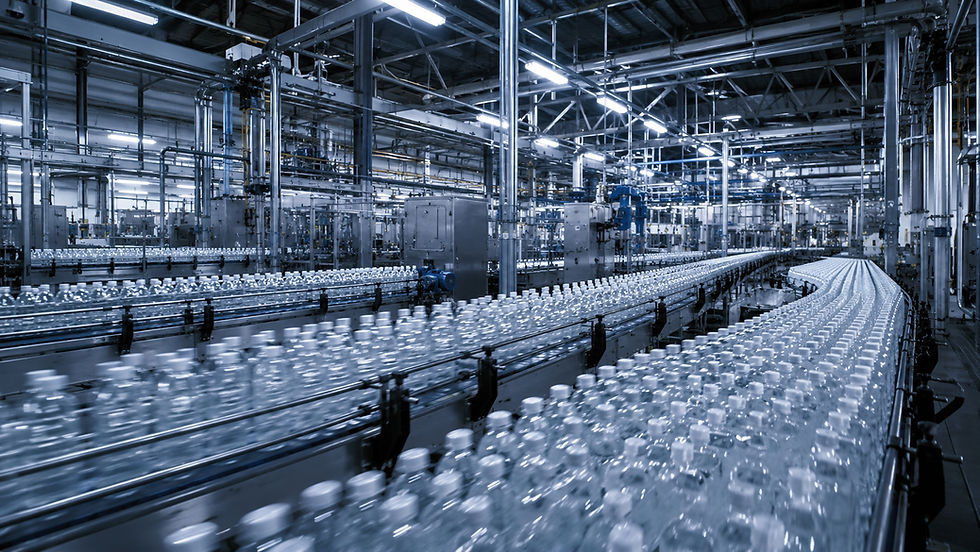
Let us be honest about how plastic became dominant in the first place.
It was not because consumers preferred it. It was because manufacturers did.
Plastic is cheap to produce, light to ship, and easy to scale. It reshaped global supply chains and made mass distribution possible at a speed and cost that glass simply could not match in the post-war industrial era.
So plastic won — not on quality, not on experience, but on economics and logistics.
For decades, that was enough.
But something is shifting now. Consumers have begun to separate convenience from quality in a way they never did before. They have started noticing how materials make them feel, not just what they hold.
And in that shift, glass has quietly, powerfully come back.
What Consumer Psychology Actually Says About Glass vs Plastic And Why Glass Feels More Premium Than Plastic
Here is where it gets genuinely interesting.
Consumer psychology research has consistently found that packaging is not passive. It is one of the first and most powerful communicators a brand has — often working before a single word is read or a price is checked.
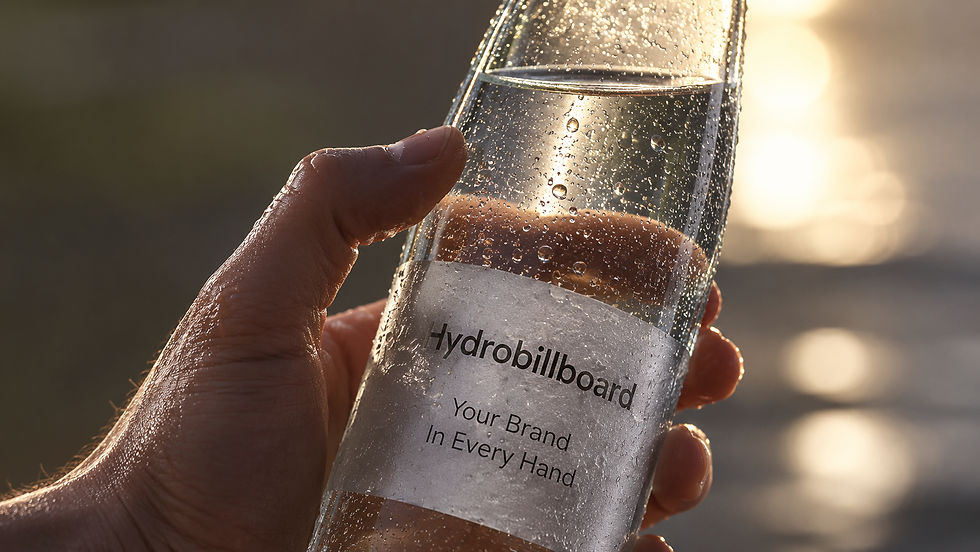
When someone holds a glass bottle, several things happen simultaneously in the brain:
Weight signals value. Heavier objects are psychologically associated with quality, substance, and care. Glass is denser than plastic. That weight is not inconvenient — it is reassuring. It tells the hand that something real is here.
Clarity signals purity. Glass is transparent in a way plastic never quite achieves. It does not yellow, scratch, or become cloudy over time. That visual clarity creates an unconscious association with cleanliness, freshness, and honesty.
Temperature response signals freshness. Glass responds to temperature faster and more dramatically than plastic. A cold glass bottle feels immediately, satisfyingly cold in the hand. A hot glass feels warm without the chemical anxiety that comes from heating plastic.
Texture signals craftsmanship. Even a smooth glass surface has a different tactile quality than plastic. It feels more deliberate. More finished. More intentional.
None of these responses require conscious thought. They happen automatically, the moment contact is made. And they form the emotional foundation of how a consumer begins to feel about a brand — before the product even performs.
The Numbers That Prove Glass Is a Brand Decision, Not Just a Packaging Decision

The data behind this shift is significant and growing rapidly.
The global glass packaging market was valued at approximately USD 74.64 billion in 2025 and is projected to reach USD 105.25 billion by 2033, growing at a steady CAGR of 4.4%. (Source: Future Market Insights) This is not a niche trend. It is a structural market shift driven by conscious consumer demand.
On the sustainability front — which is now deeply connected to premium perception — the findings from McKinsey's 2025 Global Packaging Survey of over 11,000 consumers across 11 countries tell a remarkable story:
36% of Indian consumers say they are willing to pay "a lot more" for sustainable packaging — the highest figure of any country surveyed globally. (Source: McKinsey & Company)
Gen Z and millennials are 1.5 times more likely than older generations to pay a premium for sustainable products. (Source: Facebook IQ / Plastiks)
In Europe, 63% of French consumers and 61% of German consumers specifically favour glass as their preferred sustainable packaging material. (Source: Ana Shishe Packaging Research)
For India specifically, that 36% figure deserves a moment of attention.
Indian consumers are not just open to sustainable premium packaging. According to McKinsey, they are the most willing in the world to pay more for it. That is an extraordinary commercial opportunity sitting right at the intersection of premium materials and brand perception — one that most brands in India have not yet fully acted on.
Why Premium Environments Have Always Chosen Glass

Look closely at the spaces where brand perception matters most.
Luxury hotels do not serve water in plastic bottles at the dining table. They use glass carafes, glass bottles, or glass vessels — because the material is part of the experience they are selling.
Fine dining restaurants do not present premium wine in plastic cups. The glass itself is part of the ritual, the ceremony, the feeling of occasion.
High-end skincare brands — La Mer, Chanel Beauty, Aesop — store their most valuable products in glass jars and glass bottles. Not because glass is cheaper. It is significantly more expensive. But because the container communicates the value of what is inside before a single ingredient is read.
Premium perfume houses have used glass for generations. Not despite its weight and fragility — but because of it.
Glass communicates that something was worth protecting.
That unconscious message is one of the most valuable things a brand can communicate and it requires no advertising copy, no campaign, and no media spend to deliver it.
The Sustainability Connection That Is Changing Brand Perception Globally

Here is something that was not true ten years ago but is undeniably true today:
Sustainability and premium perception are now the same conversation.
Modern consumers — especially younger Indian consumers — do not separate environmental responsibility from brand quality. They see them as the same signal. A brand that uses thoughtful, sustainable materials is perceived as a brand that thinks carefully about everything.
Glass fits perfectly inside this shift.
It is infinitely recyclable without any loss in quality or purity. Unlike most plastics, which degrade in quality with each recycling cycle, glass can be recycled endlessly and returned to identical quality. It does not leach chemicals into beverages. It does not carry the growing cultural anxiety that surrounds single-use plastic.
According to McKinsey's 2025 research, Gen Z is not just vocal about climate issues — they are willing to back it up with their spending, making sustainable packaging a purchasing factor even when environmental concerns rank below price sensitivity.
For Indian brands building a premium positioning right now, the timing of this shift represents a genuine strategic window. India leads all 11 countries surveyed in willingness to pay significantly more for sustainable packaging — and glass sits at the center of how sustainable premium is perceived across cultures and demographics.
Glass Does Something Advertising Cannot — It Creates Presence Without Interruption

This is perhaps the most important insight for modern brand marketing, and the one most brands are still figuring out.
Think about what most advertising does.
It interrupts. It appears between things people actually want. It competes for attention it has not earned. And as we have explored in earlier posts, modern consumers have become extraordinarily good at mentally filtering it out.
Glass does something fundamentally different.
A beautifully designed glass bottle placed inside a café, a hotel lobby, a corporate event, a premium restaurant, or a wellness space does not interrupt anyone. It becomes part of the atmosphere. It sits inside the experience naturally.
People notice it not because it is loud, but because it is beautiful.
They engage with it not because they were forced to, but because they chose to pick it up.
And every time they use it, refill it, or carry it through their day, the brand on that bottle travels with them — organically, without a single additional rupee of media spend.
That is a completely different model of brand visibility. And it is one that glass makes possible in a way that plastic simply cannot match aesthetically or emotionally.
The Visual Advantage That Makes Glass Dominate Brand Photography
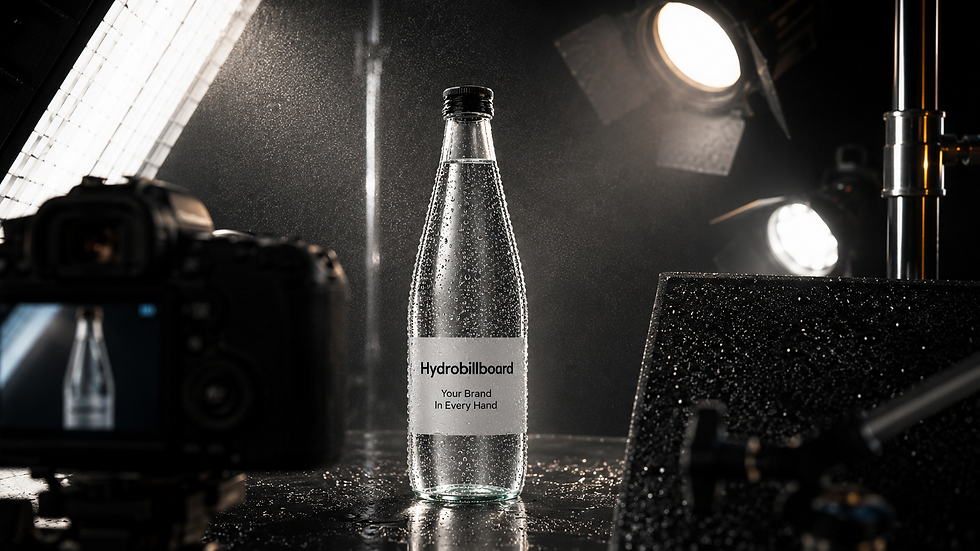
There is also a purely practical reason why glass dominates luxury brand advertising photography and video.
Glass interacts with light in ways that are extraordinarily photogenic.
Condensation on a cold glass bottle creates a visual texture that signals freshness. The transparency allows for layered lighting effects. Reflections on glass surfaces create depth and cinematic quality. Minimal labelling on glass consistently looks cleaner and more sophisticated than the same label applied to plastic.
This is why beverage campaigns for premium brands almost universally feature glass bottles even when plastic versions exist in the same product line.
And in an era where brand content lives across Instagram, websites, YouTube, and out-of-home media, the visual premium that glass delivers in photography and video translates directly into how a brand is perceived at scale.
Plastic requires louder branding to compete visually. Glass allows subtlety. And subtlety, in premium branding, is everything.
What This Means for Brands Thinking Differently About Presence
The brands that will build the deepest recognition over the next decade are not going to be the ones who spent the most on digital impressions.
They are going to be the ones who found their way into people's daily lives through objects that feel premium, purposeful, and worth keeping.
This thinking is exactly what sits at the foundation of Hydrobillboard — the idea that brand presence does not need to live on a billboard, a banner, or a screen fighting for two seconds of attention.
It can live in a beautifully crafted glass bottle. Carried through offices, events, hotels, and everyday environments. Held by real people in real moments. Associated not with interruption, but with quality, care, and intention.
Because when a brand chooses glass over plastic, it is not just making a packaging decision.
It is making a statement about what kind of brand it wants to be.
And in a world where consumers are paying close attention to exactly those signals — that statement travels further than any advertisement ever could.
The Bottom Line: Material Is Message
Your packaging is not a container.
It is the first thing your brand ever says to someone.
Glass says: we thought about this. We care about quality. We respect the person holding this.
Plastic says: we chose convenience.
In a market where Indian consumers lead the world in willingness to pay for sustainable premium packaging, and where Gen Z and millennials are actively making purchase decisions based on material values — the choice between glass and plastic is no longer just operational.
It is one of the most important brand decisions a company can make.