Hospitality Marketing Strategy
- Hydrobillboard Editorial

- Jun 24
- 17 min read
Updated: Jul 4
Quick answer: Most hotel, restaurant, and mall advertising fails to convert attention into actual footfall because digital ads and traditional signage rarely reach people at the moment they're deciding where to go. A stronger approach places the brand physically in the everyday environments of the target audience, building familiarity before the decision moment arrives.
If you own a hotel, run a restaurant, or manage a mall — whether it is a heritage boutique property in Rajasthan, a fine dining restaurant in South Mumbai, a cloud kitchen serving three zip codes in Bengaluru, or a retail mall in a Tier II city that needs to fill anchor stores and drive consistent footfall — you need a hospitality marketing strategy that actually converts attention into walk-ins, not one more ad campaign that disappears the moment the budget runs out.
The hospitality and F&B industry is genuinely enormous and genuinely growing. But the way most hotel owners, restaurant founders, and mall managers are spending their marketing budgets is producing results that do not justify the investment — and the honest conversation about why is one most marketing agencies prefer not to have with their clients.
This piece has that conversation. With real numbers, real consequences, and a genuinely better alternative that most hospitality businesses have never considered.
The Indian Hospitality Market — The Opportunity Is Real and Growing Fast
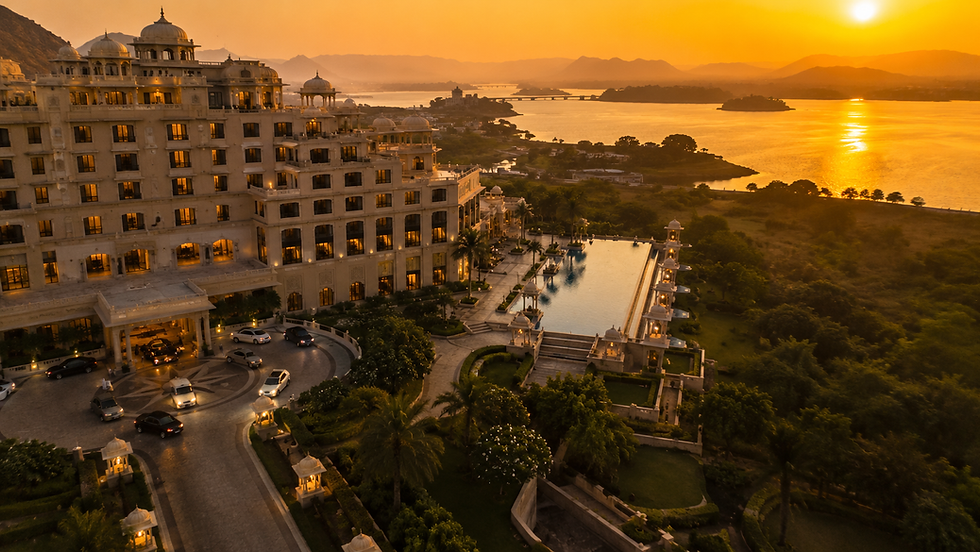
The Indian hospitality industry market was valued at over USD 60 billion in 2025 and is projected to reach USD 116 billion by 2034, growing at a CAGR of 7.34%. (Source: IMARC Group)
A separate analysis by Mordor Intelligence projects the market at USD 27.96 billion in 2026, reaching USD 55.67 billion by 2031 at a CAGR of 14.76% — driven by a larger domestic travel base, rising middle-income population, and improved air and road connectivity. (Source: Mordor Intelligence)
The branded hotel inventory is projected to add over 100,000 new rooms by 2029, yet demand growth is anticipated to outpace supply — creating favorable conditions for increased occupancy and robust average room rates for properties that are well-positioned in the market.
India's domestic tourism spending reached approximately USD 185 billion in 2024 — underscoring that the hospitality and F&B opportunity is driven overwhelmingly by Indian consumers, not foreign visitors. The customers walking into your hotel, restaurant, or mall are Indian — living in your city, your neighbourhood, your community.
That geographic and cultural specificity is exactly what makes most current advertising approaches so poorly suited to the hospitality business. And it is exactly what makes the Hydrobillboard model so naturally aligned with how hospitality marketing should work.
Why Digital Advertising Fails as a Hospitality Marketing Strategy
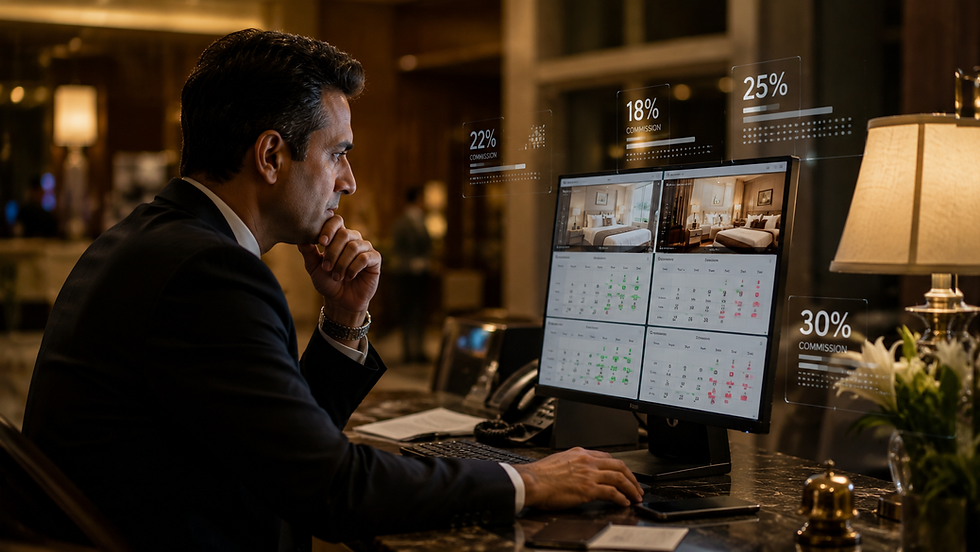
Let us start with the channel most hospitality businesses are currently spending the majority of their marketing budget on — digital advertising — and be honest about what the verified data actually says.
The Restaurant Digital Advertising Reality
Restaurants typically pay between $35 to $50 per conversion on Google Ads — per single customer action, whether that is a reservation, an order, or a click through to the menu. (Source: ASTRALCOM, 2025)
For a restaurant with an average transaction value of ₹800 to ₹1,500 per cover, paying ₹3,000 to ₹4,000 in digital advertising cost for every single customer acquired is mathematically difficult to justify — especially when restaurant margins in India typically sit between 5% and 15%.
The restaurant industry is notoriously challenging due to high competition, thin profit margins, and shifting consumer preferences. Restaurants already balance food costs, labour expenses, and overhead while ensuring consistent quality and customer satisfaction. Adding a digital advertising bill that costs more per customer than the actual meal profit creates a spiral that most restaurant owners recognise but struggle to break out of.
Digital advertising costs for Indian businesses range from ₹25,000 to ₹2,00,000 per month for comprehensive digital plans. (Source: Wing Communications, 2025) For a mid-size restaurant or a boutique hotel in a Tier II city, spending ₹1 to 2 lakh per month on digital marketing that may or may not reach the right local customer is a significant and poorly-measured investment.
The Hotel OTA Trap
For hotels specifically, the digital advertising problem is compounded by the OTA dependency trap.
Online Travel Agencies — MakeMyTrip, Goibibo, Booking.com, Agoda — dominate hotel discovery and booking. Independent hotels that rely on OTA visibility are paying 15% to 25% commission on every booking, while simultaneously running digital advertising to drive direct bookings that compete against the same OTAs in Google search results.
The result: hotels pay for traffic, then lose a significant percentage of that traffic to OTAs who out-bid them on their own branded keywords — and then pay again in OTA commission on the bookings that come through anyway.
Short-form video content on Instagram Reels and similar platforms delivers the highest organic reach for hotels — but organic reach on social media has been declining consistently for business accounts for years. What once worked organically now requires paid boosting to reach the same number of people — adding another recurring cost to an already crowded digital budget.
The Mall Advertising Problem
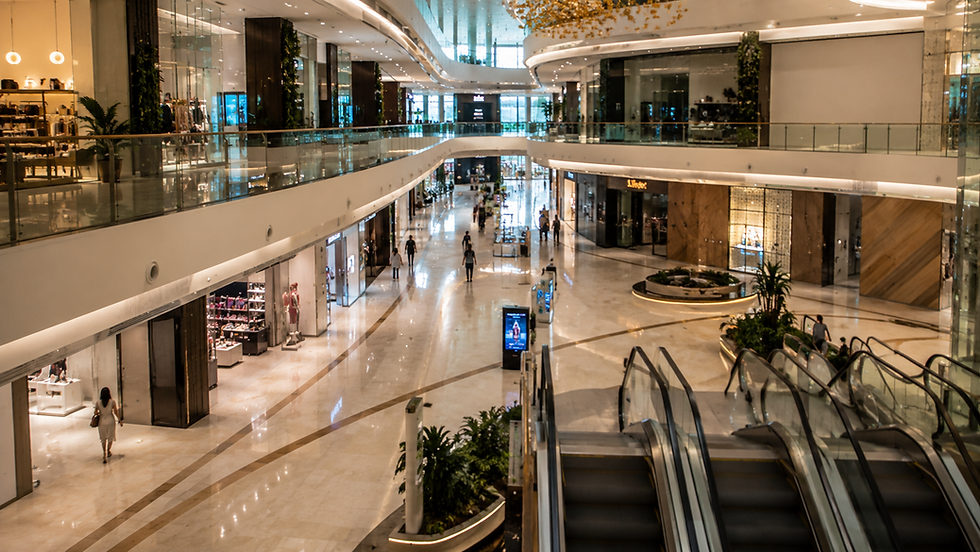
For mall owners and managers, digital advertising creates a specific and often invisible problem: it cannot drive footfall.
A person who sees a mall's Instagram ad is not inherently motivated to get in their car, find parking, and spend two to three hours browsing. They might save the post. They might not. The platform logs an impression regardless.
Mall marketing needs to reach people when they are already in the physical mood to shop, dine, or be entertained — and digital advertising, which reaches people while they are sitting at home on their phones, almost never creates that readiness.
The conversion gap between digital impression and actual footfall for a shopping mall is one of the widest in any retail category. And it cannot be fixed by better creative or more precise targeting, because the problem is not the message — it is the medium.
Why Offline Advertising Is Even Worse for Hospitality Businesses
Most hospitality owners who become disillusioned with digital advertising's results consider going back to traditional offline advertising — billboards, hoardings, newspaper inserts, pamphlets, radio spots. And for some hospitality categories, some offline advertising has always made sense.
But the reasons it is declining in effectiveness — for hotels, restaurants, and malls specifically — are worth understanding clearly before committing budget.
Hoardings and Billboards — The Geography Problem
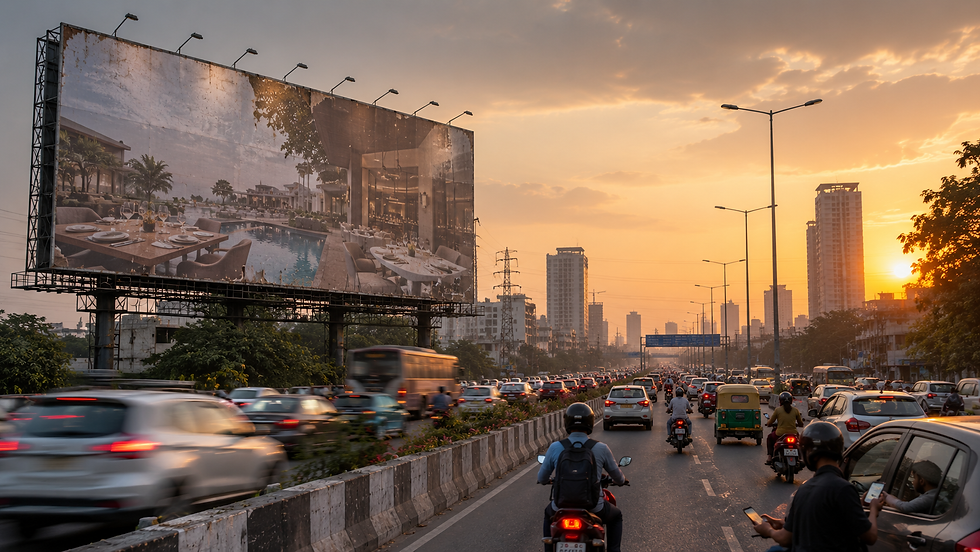
A hoarding for a restaurant on a major city road reaches thousands of vehicles and pedestrians per day. The question is: of those thousands, how many will actually travel to the restaurant's specific location?
Restaurant footfall is hyperlocal. The overwhelming majority of a restaurant's customers come from within a 3 to 5 kilometre radius of the restaurant itself. A billboard on a road three kilometres away, reaching people who are commuting past it toward a completely different destination, reaches an audience that is almost entirely irrelevant to the restaurant's actual customer base.
For a hotel, the geography problem is even more acute. A luxury boutique hotel in Jaipur's old city does not benefit from a billboard on Delhi-Jaipur highway — the person who chooses that hotel is not making the decision while driving. They are making it while searching online or receiving a recommendation from someone they trust. By the time they are on the highway, the decision is already made.
Outdoor advertising cannot intercept the actual moment of hospitality purchase decision. It can only create ambient awareness — at a cost per relevant impression that is impossible to calculate or justify.
Pamphlets — The Hospitality Category's Worst Format
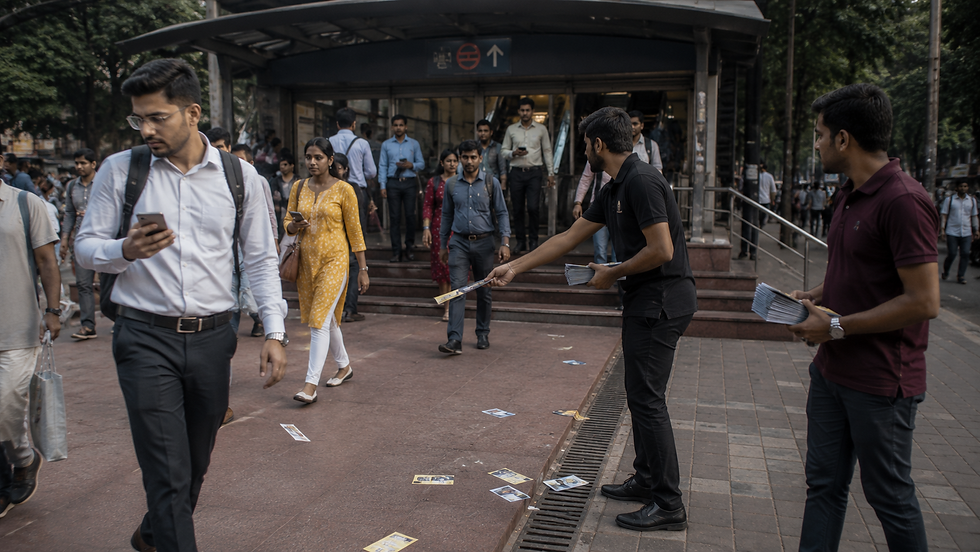
Imagine distributing pamphlets for a fine dining restaurant outside a busy metro station.
The person receiving the pamphlet is in transit. They are thinking about where they are going. They are managing their phone, their bag, their commute. They have not eaten yet, but they are not thinking about a reservation at a specific restaurant for a specific occasion — they are thinking about getting to their next destination.
They receive the pamphlet. They may glance at it. Within minutes it is in a bag, a pocket, or a bin.
The occasions that drive restaurant choices — a birthday dinner, an anniversary celebration, a client lunch, a family gathering — are not impulse decisions made because someone handed you a paper in a crowd. They are considered decisions made in advance, based on recommendations, past experience, or brand recognition.
A pamphlet cannot build brand recognition. It can only interrupt someone who was not thinking about your restaurant.
For a premium hotel or fine dining restaurant, the quality signal of a pamphlet is also damaging. The moment someone's first encounter with your brand is a mass-printed flyer, their expectation of your premium positioning has already taken a hit.
Auto-Rickshaw Panels and Cab Branding — Wasted Premium

Many restaurants and hotels in Indian cities use auto-rickshaw panel advertising or cab branding — wrapping vehicles with promotional images and contact details.
The problem for premium hospitality brands is the association. A luxury hotel whose branding appears on the side of an auto-rickshaw navigating congested traffic, accumulating exhaust and dust, communicates the opposite of the premium experience the hotel is selling.
The medium is the message — and the message here is not luxury.
For a neighbourhood restaurant or a budget property, the channel may produce some awareness. For any brand that wants to be perceived as premium, aspirational, or special — the vehicle advertising category is a genuine brand equity risk.
Newspaper and Magazine Inserts — Declining Reach, Zero Targeting
India's print advertising market has been declining steadily as readership migrates online. The readers who remain are skewed toward older demographics and specific geographic markets — which may or may not match the hospitality brand's target customer.
A newspaper insert for a restaurant reaches everyone who opens that section of that newspaper that morning — regardless of whether they live near the restaurant, have any occasion to dine out soon, or have any interest in the cuisine being offered.
The cost per relevant impression for print advertising for most hospitality businesses — once you account for the small percentage of readers who are actual potential customers in the right geographic and demographic range — is significantly higher than most business owners calculate when they see the headline rate.
What a Hospitality Marketing Strategy Should Actually Be Built Around
Here is the insight that changes how you should think about marketing your hotel, restaurant, or mall — and it comes directly from consumer psychology research.
Hospitality purchase decisions are almost never made at the moment of first exposure to advertising. They are made based on:
Familiarity and trust built through repeated positive encounters with a brand over time.
Recommendation and social proof from people whose taste the customer trusts.
Top of mind awareness — the phenomenon where the brands that come to mind first when a purchase occasion arises are the ones that have been encountered repeatedly in contexts that felt positive and relevant.
This is the fundamental reason why word of mouth remains the most powerful acquisition channel for almost every restaurant, hotel, and mall that has honestly evaluated their customer sources. People come because someone they trust told them to come — not because they saw a hoarding or clicked an ad.
The question, therefore, is not which advertising format reaches the most people. It is which marketing approach builds the kind of genuine familiarity and top of mind awareness that creates the recommendation reflex — the automatic moment when a person is asked "where should we go for dinner?" and your restaurant is the first name that comes to mind.
That awareness is built through repeated, positive, real-world encounters with a brand. And it is exactly what Hydrobillboard creates — in the most natural way possible.
How Hydrobillboard Works for Hotels, Restaurants, and Malls
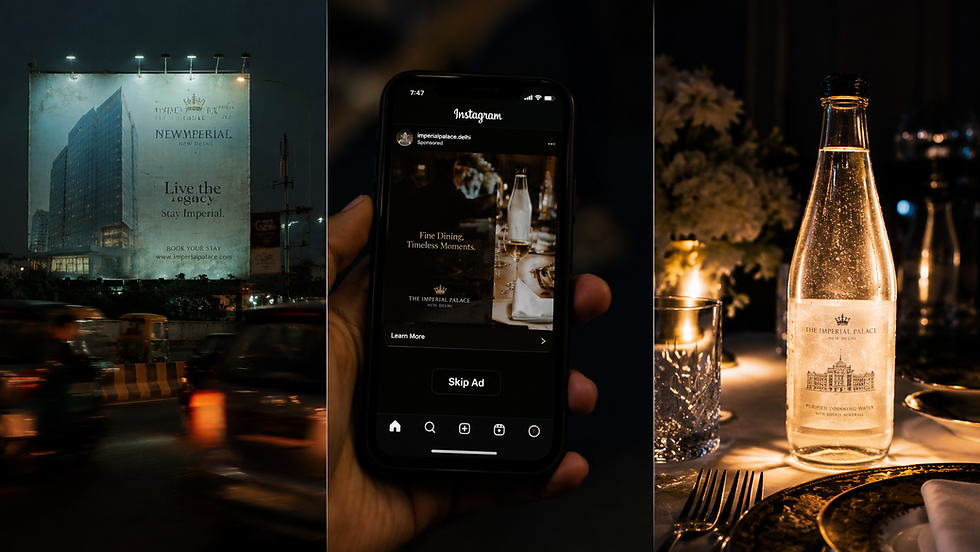
Hydrobillboard places premium branded glass water bottles into the hands of the exact people who are most likely to visit your hotel, eat at your restaurant, or shop at your mall — in the environments where they are most receptive to discovering and remembering a new hospitality experience.
Here is exactly what that looks like for each business type
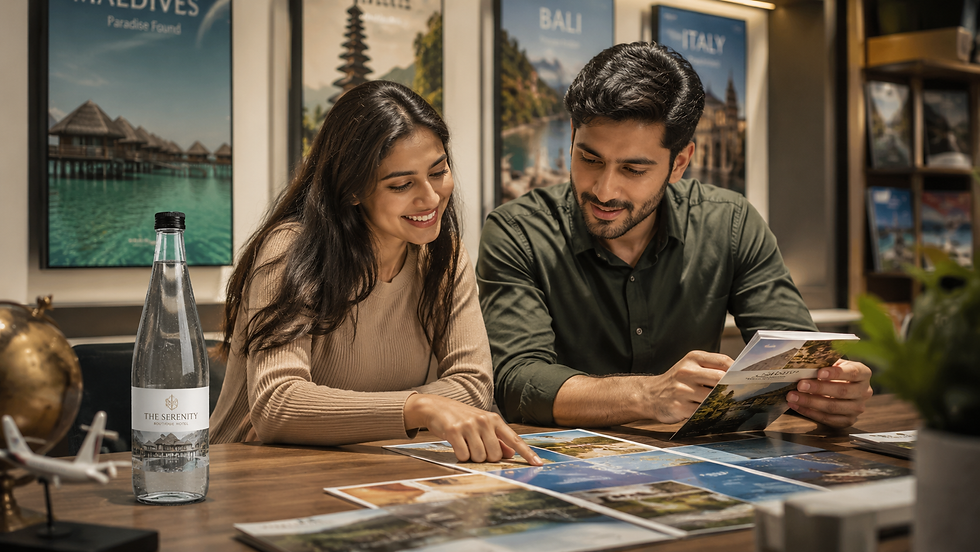
If You Own or Manage a Hotel
For a Premium Business Hotel:
Your guest is a corporate professional — a senior manager, a consultant, a founder, an executive traveling for work. They choose hotels based on trust, familiarity, and the recommendation networks of their professional community.
A Hydrobillboard campaign for your hotel places premium branded glass bottles in:
Corporate offices and business centres in your city where your target guests work
Premium co-working spaces frequented by business travelers and senior professionals
Executive lounges at airports and railway stations
Corporate event venues and conference centres
Every morning when a senior professional picks up their Hydrobillboard-branded hotel bottle at their desk, your hotel's name is present in their daily professional environment. When their next travel booking occasion arrives — a business trip to your city, a client who needs accommodation, a conference requiring hotel blocks — your hotel is already familiar. Already trusted. Already top of mind.
For a Leisure or Boutique Hotel:
Your guest is a traveler seeking an experience — a weekend escape, a honeymoon, a family vacation, a cultural trip. They discover hotels through aspirational content, curated recommendations, and the social networks of people with similar travel sensibilities.
A Hydrobillboard campaign for your property places branded bottles at:
Travel agencies and tour operator offices
Upscale cafés and lifestyle spaces frequented by travel-conscious consumers
Wedding planners' studios and event management offices where honeymoon and celebration travel is discussed
Premium residential communities and apartment complexes where your target guests live
For a Heritage or Luxury Property:
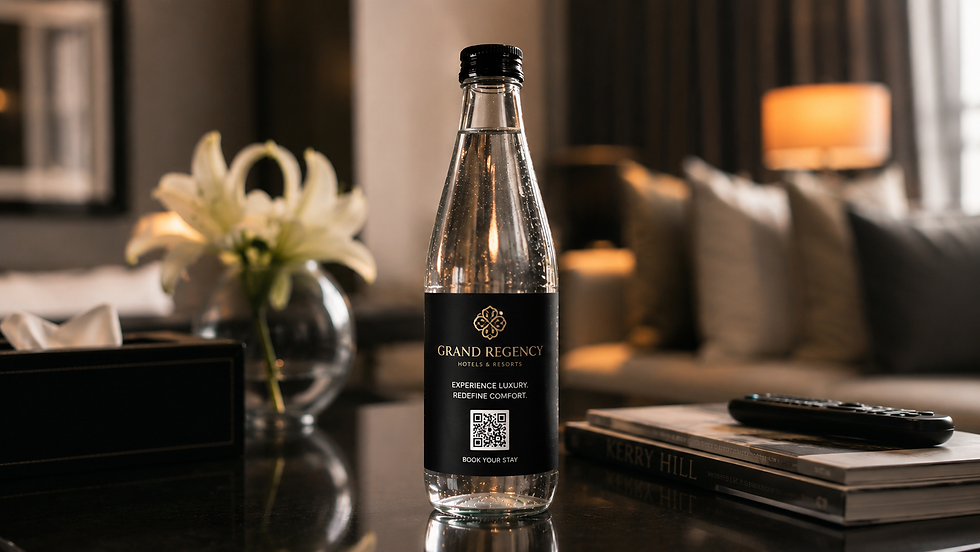
Nothing communicates luxury more immediately than a premium glass bottle. The weight of the glass, the clarity, the physical quality of the object — all of these communicate the same values your property is built around before a single word about the hotel is read.
A Hydrobillboard glass bottle branded with your heritage property's name and aesthetic, held by a premium traveler in their daily environment, does not say "advertisement." It says "this brand belongs in my world." That is the only marketing message that works for luxury hospitality.
If You Own or Operate a Restaurant

For a Fine Dining Restaurant:
Your customer makes their reservation in advance, for a specific occasion, with a specific person in mind. They are not choosing your restaurant because they saw an ad. They are choosing it because your name came to mind — or was recommended — when the occasion arose.
A Hydrobillboard campaign places your restaurant's branded bottles at:
Corporate offices in your neighbourhood and nearby business districts — where your target customers work and where client entertainment decisions are made
Premium co-working spaces and creative industry offices — where the food-conscious, experience-oriented professionals who form your core customer base spend their days
Wine stores, gourmet grocery stores, and specialty food retailers — places where the same customer who would love your restaurant is already present in a food-appreciative mindset
Every time the managing director who holds your restaurant's branded bottle takes it to a client meeting — they are carrying your restaurant's name into exactly the context where corporate dining decisions are made.
For a Cafe or Specialty Coffee Brand:
Your customer is a regular. They come back not because of advertising but because your space has become part of their daily ritual — the morning flat white before work, the afternoon meeting spot, the weekend study session.
A Hydrobillboard campaign builds that ritual before the first visit, by placing your branded bottle in the hands of people whose daily life already includes the kind of moments your café is designed for:
Nearby residential areas — delivered through local community spaces, fitness studios, and wellness centres
Creative and tech co-working spaces — where the remote workers and freelancers who make up a large portion of specialty café customers spend their mornings
When they see your café for the first time, it already feels familiar. Because your bottle has already been part of their morning for months.
For a Cloud Kitchen or Delivery-First Restaurant Brand:
Your challenge is different from a dine-in restaurant. You need repeat ordering — customers who order from you regularly rather than trying you once and forgetting. Brand recognition is everything in a category where the ordering interface shows a dozen competitors at the same time.
A Hydrobillboard campaign places your branded bottles in the residential buildings, office complexes, and co-working spaces where your delivery radius actually operates. People who receive and use your bottle are already within your delivery zone — making them immediately actionable customers. And every time they open a delivery app, your brand name feels familiar in a way that none of your competitors' names do.
If You Own or Manage a Mall
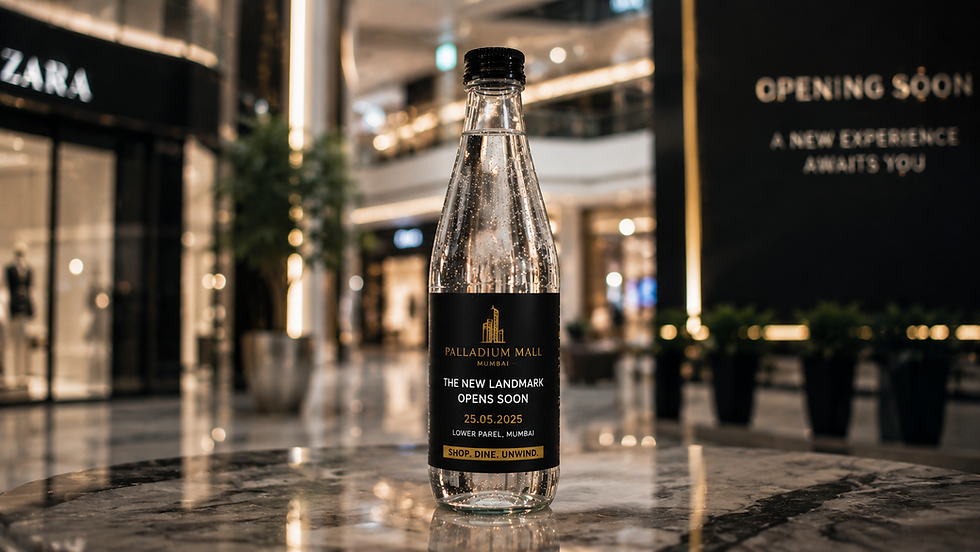
For a Regional or City Mall:
Your marketing challenge is fundamentally about footfall — getting people into the physical space regularly, not just on weekends and during sales.
The most powerful driver of repeat mall visits is social habit — the sense that the mall is where your social group goes for leisure, dining, shopping, and entertainment. That habit is built through community presence, not digital advertising.
A Hydrobillboard campaign for your mall places branded bottles at:
Residential societies and apartment complexes within your primary catchment area — building brand familiarity with the people who live closest to your mall
Schools and colleges within the catchment — building familiarity with young families and student demographics who drive consistent footfall
Corporate offices within commuting distance — where professionals who will choose the mall for post-work dining and entertainment actually spend their days
Fitness centres and wellness studios in the neighbourhood — where health-conscious consumers who also value premium retail and dining experiences gather
Every bottle held by a resident within 5 kilometres of your mall is building the association between your brand and their leisure identity — making your mall the instinctive first answer when they ask themselves "where should we go this weekend?"
For a Luxury Mall:
A luxury mall's marketing is not about footfall volume. It is about footfall quality — attracting the right customers who have the purchasing power and the brand affinity to shop at the retailers you house.
A Hydrobillboard campaign for a luxury mall places bottles exclusively in the environments where premium consumers are already present:
Premium business addresses, luxury residential complexes, and premium co-working spaces
Golf clubs, premium fitness studios, and luxury wellness centres
Business class airport lounges and premium transit environments
The glass bottle itself — premium, sustainable, beautiful — communicates the same values your mall represents. Holding a Hydrobillboard bottle branded with your luxury mall's identity tells the person holding it, and everyone who sees them holding it, that this is a brand that belongs in their premium world.
Why Hydrobillboard Works Even Better for Offers, Giveaways, and Event Nights
There is a category of hospitality marketing that runs on a much shorter clock than anything covered so far — and it deserves its own honest look, because it is where most hotels, restaurants, and malls quietly waste the most money.
Every property runs these moments regularly. A weekend DJ night. A festive buffet combo for Diwali or Christmas. A New Year's Eve package. A monsoon brunch special. A mall-wide giveaway tied to a long weekend. An anniversary celebration with a free dessert or welcome drink.
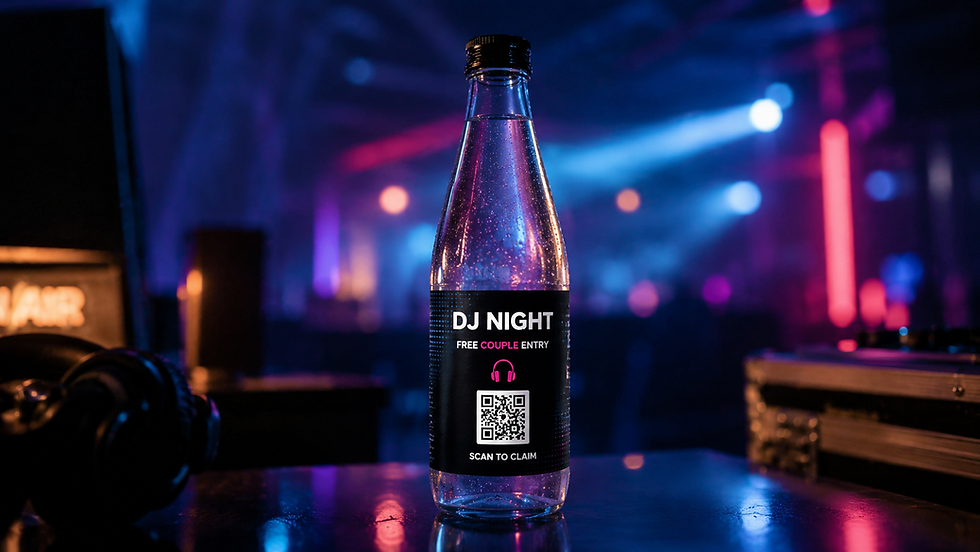
The problem with advertising these specifically is timing. A DJ night announced on Wednesday for Friday has roughly 48 hours to reach someone, get noticed, and convert into an actual booking or walk-in — all while every other restaurant and lounge in the same neighbourhood is posting the exact same kind of announcement on the exact same evening. Paid boosting during these windows is expensive precisely because every competing venue is bidding for the same local audience's attention at the same time, for an event that becomes worthless to advertise the moment it happens.
This is the opposite of how a Hydrobillboard campaign behaves.
Because the bottle is already sitting on a regular customer's desk, already part of their gym bag, already the object they reach for at a nearby co-working space — your venue does not need to win their attention from zero when Friday's DJ night is announced. They already have a relationship with your name. The announcement is not introducing your restaurant to a stranger scrolling a feed. It is reminding someone who already trusts you that there is a reason to come in this particular weekend.
A few ways this shows up in practice:
A restaurant running a recurring weekend event — a Friday DJ night, a Sunday brunch combo — benefits from an audience that does not need rediscovering every single week. The regular crowd that already holds your branded bottle treats "what are we doing this weekend" as a question your venue is already in the running to answer, rather than one decided fresh by whichever ad happened to load first.
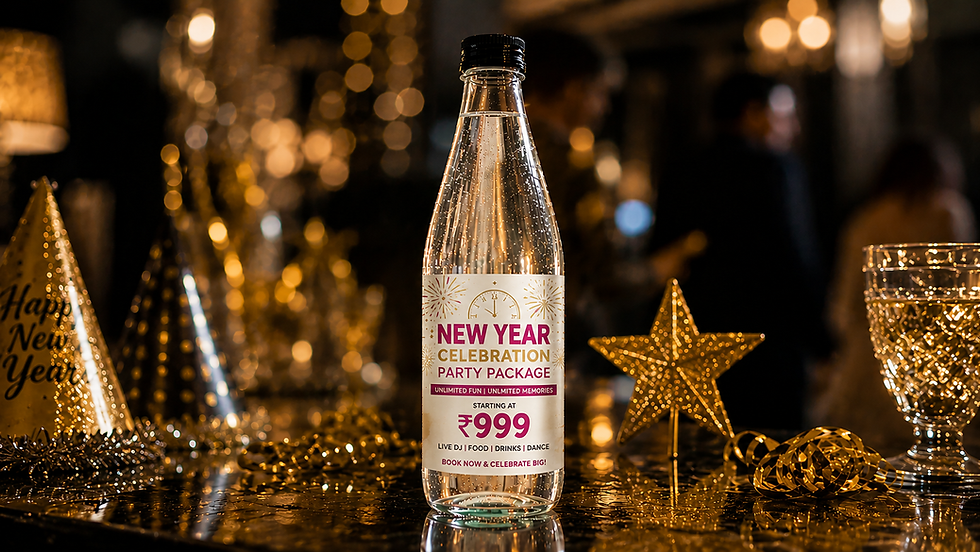
A hotel launching a festival package — a Diwali staycation deal, a New Year's countdown package — gets the advantage of awareness that was built months earlier among exactly the corporate travellers and local premium households who would actually book it, instead of trying to manufacture that awareness inside a two-week festive ad rush alongside every other property in the city doing the same thing.
A mall running a festival giveaway or contest reaches residents who already associate the mall with their weekend routine, meaning a giveaway announcement lands with people who were already inclined to visit — not with a cold audience who has never set foot in the property and has no reason to make a special trip for a one-time prize.
The underlying principle is simple: short-notice hospitality offers do not have time to build trust from scratch. They depend entirely on whether trust already exists. Hydrobillboard builds that trust in the weeks and months before any specific event is even on the calendar — so when the DJ night, the festive combo, or the giveaway finally goes live, it is landing with people who were already going to consider you, not people meeting your name for the first time during the one weekend it matters least to make a strong first impression.
The Hospitality-Specific Power of the Glass Bottle
For hotels, restaurants, and malls specifically, there is a dimension of the Hydrobillboard model that goes beyond general brand recall — and it is worth understanding in detail.
Glass is the universal material of hospitality excellence.
Every fine dining restaurant serves water in glass. Every luxury hotel room has glass bottles on the bedside table. Every premium bar serves cocktails in crystal. Every high-end café serves coffee in ceramic and glass.
Plastic bottles do not exist in the world of premium hospitality. They communicate mass production, disposability, and cost-cutting — the opposite of everything a hotel, restaurant, or luxury mall is trying to convey.
When your hotel or restaurant brand appears on a premium glass water bottle — the same material that your dining room already uses, the same material that your guests associate with the quality experience you provide — the brand association is immediate, intuitive, and deeply aligned with your positioning.
A person holding a glass bottle branded with your restaurant's name does not think "advertisement." They think "this brand takes quality seriously." And that thought — formed unconsciously, reinforced daily — is the most powerful brand association any hospitality business can build.
The Comparison Every Hospitality Business Owner Needs to See
Factor | Digital Advertising | Offline Hoardings and Print | Hydrobillboard |
Reaches customers in your specific catchment area | ⚠️ Geographic targeting approximate | ⚠️ Only if placed nearby — no audience filter | ✅ Placed precisely in environments where your actual catchment customer lives and works |
Builds top of mind awareness for hospitality decisions | ❌ Single impression — easily forgotten | ❌ Brief glance — no lasting memory | ✅ Daily physical presence — builds durable familiarity |
Communicates premium quality | ⚠️ Photography — no sensory dimension | ❌ Billboard format — generic | ✅ Glass material communicates premium immediately through touch |
Cost per customer acquired (restaurants) | $35 to $50 per conversion and rising | Untrackable — likely higher | One-time campaign cost — no recurring spend |
Impressions after spend ends | ❌ Zero | ❌ Zero | ✅ Continues for months per bottle |
Suitable for luxury and premium positioning | ⚠️ Depends on creative quality | ❌ Auto panels and pamphlets damage premium perception | ✅ Glass is the material of premium hospitality |
Drives footfall to physical location | ❌ Weak connection between impression and visit | ❌ Awareness only — no conversion mechanism | ✅ Daily brand presence in catchment area builds visit intention |
ESG and sustainability alignment | ⚠️ Neutral | ❌ Print and vinyl waste | ✅ Reusable glass — aligned with growing sustainability expectations in hospitality |
The Vision: Hospitality Marketing That Belongs in the World
There is something slightly absurd about the current state of hospitality marketing that nobody says out loud in industry conferences.
Hotels — whose entire proposition is the premium physical experience of a beautiful room, excellent food, and attentive service — spend their marketing budgets on digital ads that someone scrolls past in 1.7 seconds on a phone while sitting on a bus.
Restaurants — whose product is fundamentally about the sensory, social, and experiential pleasure of a meal — distribute paper pamphlets that are thrown away before someone reaches the corner.
Malls — whose entire value proposition is the physical, social, immersive experience of being in a beautifully curated space — try to generate footfall through Instagram posts that are consumed and forgotten in the same session someone is already ordering groceries for home delivery.
The medium is always communicating something about the message. And for hospitality businesses, the medium of most current advertising is communicating exactly the opposite of what the product delivers.
A premium glass bottle — physical, beautiful, useful, sustainable, held in someone's hands every day — communicates the same values that every great hotel, restaurant, and mall is built around.
Presence. Quality. The pleasure of physical experience. The feeling that someone thought carefully about every detail.
That is what Hydrobillboard puts in your customer's hands. Every day. Long before they ever walk through your door — and long after they leave remembering why they will come back.
For hospitality businesses in India — an industry built entirely on the quality of physical experiences — that one percent of marketing done with genuine intention and genuine craft is worth more than any dashboard of digital impressions that disappear the moment the budget runs out.
FAQ block:
Why does hospitality advertising often fail to convert into visits? Because most advertising reaches people passively, well before or after the moment they're actually deciding where to eat, stay, or shop.
What advertising works best for restaurants and hotels? Advertising placed physically within the everyday environments of the target audience builds familiarity ahead of the decision moment, which tends to convert better than generic reach-based campaigns.
Is social media advertising enough for a hospitality business? Social media alone often struggles with the trust and memorability needed to convert a first-time visit, especially in competitive local markets.
How can a hospitality brand stand out locally? By building a consistent, tangible brand presence within the community it serves, rather than relying solely on short-lived digital promotions.