Cosmetics Advertising

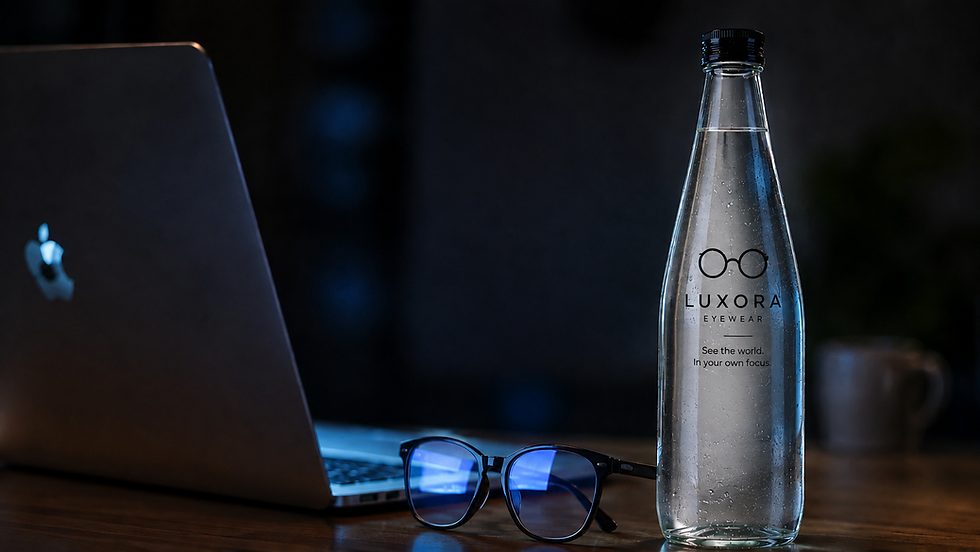
Quick answer: Cosmetics advertising in India — skincare, makeup, haircare, or clean beauty, D2C or legacy — runs into a problem that's specific to this category: brands have spent three years rebuilding packaging around sustainability and refill systems, then hand the marketing budget for that same product to formats (plastic hoardings, disposable standees, oversaturated Meta feeds) that contradict everything the packaging just promised. Digital struggles because acquisition costs in beauty have climbed sharply since 2023 and influencer compliance has become a genuine legal risk. Traditional OOH struggles because it broadcasts to people with no buying intent and can't demonstrate the one thing a beauty buyer actually evaluates before purchase: texture, trust, and material honesty. Hydrobillboard fits this gap by putting the brand on something genuinely useful and reusable — a premium glass bottle, geotag-verified, placed exactly where the target buyer already spends time.

Nobody buys a serum the way they buy a phone case. There's texture, smell, skin type, shade, and a long list of ingredients most buyers now actually read before checking out. And yet most cosmetics marketing in India in 2026 is still built around the same playbook that sells everything else: broad reach, retargeting, and hoping the discount code closes the gap that trust should have closed instead.
Who does this actually apply to?

This isn't a skincare-only problem. The same gap shows up across the entire beauty and personal care ecosystem:
Skincare and serum brands competing in India's fastest-growing beauty sub-category, where ingredient transparency now decides the sale more than the ad does
Colour cosmetics and makeup brands fighting for shelf space in a market that's shifting hard toward "skinification" — makeup expected to perform like skincare
Haircare brands competing in a category where trust is built through repeat, daily use rather than a single purchase decision
D2C beauty startups trying to acquire customers profitably while Meta and Google costs climb faster than most beauty margins can absorb
Clean beauty and natural/ayurvedic brands trying to prove sustainability and ingredient claims to a buyer who's grown skeptical of the word "natural" itself
Men's grooming brands trying to build category trust in a segment that's growing but still has to work harder for credibility than women's beauty
Salons, spas, and dermatology-linked beauty brands trying to convert footfall into a retail or product relationship that outlasts the appointment
Private-label and contract-manufactured beauty brands trying to build a distinct identity in a market where the underlying formulation is often shared across competitors
Every one of these faces some version of the same problem: the buyer is more informed and more skeptical than ever, and most of the tools available were built for categories where trust wasn't the entire sale.
How big is the industry, and where does the money actually go?

India's beauty and personal care market is now valued above $30 billion, with global beauty tracking toward roughly $450 billion by the end of the decade, growing at a steady mid-single-digit rate. The Indian makeup segment specifically sits in the same growth band globally, with hybrid skincare-makeup products — tinted sunscreens, serum foundations, lip treatments — pulling disproportionate growth as buyers increasingly want products that do double duty.
Beneath that headline number, the spend patterns look like this:
Customer acquisition cost in Indian beauty D2C typically runs somewhere between ₹300 and ₹800 per customer on Meta and Google, and that number has been climbing — ad costs on both platforms are up roughly 30–40% year-on-year in competitive D2C categories, with beauty and wellness among the hardest hit.
Influencer marketing in India is now a genuine industry, projected to cross ₹3,000 crore with roughly 25% annual growth — outpacing traditional digital ad growth. Beauty is one of the categories driving that number hardest, since a large share of Indian buyers say influencer content directly shapes what they buy.
That same influencer channel now carries real compliance risk. Regulatory bodies processed well over a thousand influencer violations in a recent reporting period, the overwhelming majority tied to undisclosed paid partnerships — and consumer protection law now backs those guidelines with legal penalties, not just industry warnings. A beauty brand's influencer campaign is no longer a low-risk, high-reward channel by default; it's a channel that needs active compliance management.
Out-of-home spend in India is still growing — roughly 8.6% this year, one of the few traditional formats still expanding while some digital channels flatten — but over 60% of that spend concentrates in just nine metro cities, leaving most of the country comparatively open.
Beauty packaging generates well over 120 billion units of waste globally every year, most of it landfilled because materials can't be cleanly separated for recycling — a number brands are now actively working to bring down through refillable and mono-material packaging, even as their marketing materials remain untouched by the same standard.
Despite rising acquisition costs, most early-stage D2C beauty brands in India still allocate a large share of revenue — commonly 20–30% for brands under roughly ₹10 lakh in monthly revenue — to marketing, because the category simply cannot grow without sustained visibility. The problem isn't the size of the budget. It's how much of that budget goes toward formats that are getting structurally more expensive and less trusted every year.
Why is digital advertising uniquely difficult for cosmetics?

Digital doesn't just underperform for beauty — several of its core mechanics work against the category specifically.
1. Acquisition costs are rising faster than margins in most beauty categories. Meta and Google costs in India have climbed 30–60% since 2023 in competitive D2C verticals, and beauty sits near the top of that list. A brand that could once profitably acquire a customer for ₹400 is often paying considerably more for the same customer today, without a matching rise in average order value.
2. Influencer marketing — beauty's most trusted channel — now carries real legal exposure. The same influencer content that drives a large share of Indian beauty purchase decisions is also the single most common source of regulatory violations, almost entirely tied to disclosure failures. Brands now need compliance processes around a channel that used to be treated as low-risk.
3. Shade, texture, and skin-type mismatch drives returns and refunds that no ad can prevent. Unlike most D2C categories, a huge share of beauty purchase risk lives in variables — undertone, skin type, fragrance — that a static ad or a video simply cannot resolve for every viewer, no matter how well-produced the creative is.
4. Buyers are actively researching ingredients before an ad ever converts them. India's beauty buyer in 2026 is documented as increasingly wanting formulation transparency, third-party test data, and sourcing proof — not glossy claims. A performance ad optimized for a fast click is structurally mismatched with a buyer who wants to research before purchasing.
5. Platform saturation means creative decays fast. Ad creative in competitive D2C categories needs refreshing roughly every one to two weeks to avoid fatigue-driven performance decay — a production treadmill that consumes budget many early-stage beauty brands don't have.
6. Greenwashing skepticism has made vague sustainability claims a liability, not an asset. Words like "eco-friendly" and "natural" are losing credibility fast with regulators and consumers alike, who now expect specific, provable claims. A brand's own paid ad copy can undercut its credibility if it leans on the same vague language buyers have learned to distrust.
What does Indian law actually let a cosmetics ad say?
This is the part most cosmetics marketing content skips entirely, and it's arguably the biggest risk in the category right now.
Cosmetics in India are governed by the Drugs and Cosmetics Act, 1940, and the Cosmetics Rules, 2020, enforced by the Central Drugs Standard Control Organisation. Rule 34 of those rules is blunt: no cosmetic may claim or imply anything false or misleading. The moment a cosmetic ad claims to treat, cure, or prevent a medical condition — "heals pigmentation," "reverses aging," "cures acne" — it risks being reclassified under drug regulations entirely, which brings a completely different, much stricter compliance regime down on the brand.
The scale of the problem is larger than most marketers assume. India's advertising self-regulatory body found that 98% of beauty ads it scrutinised in its most recent annual review required modification — meaning near-total non-compliance is closer to the industry norm than the exception. Regulators have also acted directly against specific cases, including a Supreme Court intervention that suspended manufacturing licences for a major FMCG player's products over misleading health and beauty claims, and a recent CDSCO public notice warning aesthetic clinics and cosmetic manufacturers against unsafe injectable "cosmetic" products marketed with misleading claims.
Counterfeiting compounds the trust problem from a different angle. Fake and substandard beauty products, often sold on the strength of an "imported" label at a fraction of the legitimate price, remain a documented concern for Indian cosmetic brands and regulators alike — which means a genuine brand is fighting for credibility not just against competitors, but against convincing fakes wearing a similar look.
Put together: a cosmetics brand operates in one of the most claims-restricted advertising categories in India, inside an industry where near-universal non-compliance is the norm, competing against counterfeits that erode consumer trust in the category itself. None of that risk sits inside a branded object with a name and a logo on it and no performance claim attached. That's a meaningfully lower-risk way to build a brand than most of what currently runs in the category.
Why doesn't traditional advertising solve this either?

Hoardings, print inserts, and mall standees are still common in beauty marketing, but the format has real structural gaps for this category specifically.
It broadcasts to people with no current purchase intent. A hoarding near a mall reaches thousands of people who aren't shopping for skincare that day, diluting relevance close to zero.
It cannot demonstrate texture, finish, or the sensory qualities beauty buyers actually evaluate — the entire category sells on how a product feels and looks in use, which a printed image cannot convey.
It's disconnected from where the actual decision happens — usually a bathroom shelf, a scrolling session at night, or a friend's recommendation — not a glance at a hoarding while driving.
It directly contradicts the sustainability positioning most beauty brands have spent years building. A brand whose packaging is refillable glass and whose outdoor creative is single-use printed vinyl is running two versions of itself at once, and an increasingly literate buyer notices the gap.
It offers no proof of placement or reuse, at a moment when beauty buyers already expect brands to document and prove their claims rather than simply state them.
What actually builds trust in cosmetics marketing?

Across research on beauty purchase behaviour, a consistent set of factors keeps showing up — and none of them can be manufactured by a thirty-second ad:
Ingredient and formulation transparency — stability data, sourcing details, and specific claims rather than vague sustainability language
Genuine user-generated content and reviews — real skin, real results, not just polished brand photography
Sampling and try-before-you-buy experiences — beauty is one of the few categories where physical trial still meaningfully changes purchase intent
Micro-influencer trust over macro reach — smaller, niche creators consistently convert better in beauty than large-follower accounts, because their audience treats the recommendation as personal rather than paid
Material and packaging honesty — buyers increasingly extend scrutiny of the product itself to how a brand markets it, and reward consistency between the two
Consistent, repeat physical presence — showing up the same way over time, in the same real spaces a buyer already frequents, rather than only appearing during a funded ad push
This is the actual opportunity for the category: not being seen more, but being verifiably consistent between what a brand claims on its packaging and what it does with its marketing budget.
How does Hydrobillboard compare to digital and traditional cosmetics advertising?
Factor | Digital Advertising | Traditional Advertising (hoardings, print, standees) | Hydrobillboard |
Real cost | CAC of roughly ₹300–₹800 per customer on Meta/Google for beauty D2C, up 30–60% since 2023; CPM for digital display runs roughly ₹2–₹10, all recurring, scaling per click and per customer | Hoardings: ₹15,000–₹60,000/month in Tier 3 towns, ₹20,000–₹2,50,000/month in Tier 2 cities (Pune, Jaipur, Lucknow), ₹1.5–₹8 lakh+/month for a standard metro site, ₹3–₹20 lakh/month for premium Mumbai/Delhi/Bengaluru locations — plus separate printing, mounting, and 18% GST on top; OOH CPM runs roughly ₹0.15–₹0.40 | ₹9,999 flat for a 25-bottle pilot; full partnerships start around ₹15,000–₹50,000 for a first run and scale by budget tier, with Studio content production bundled in at every level, no separate line item |
Material consistency with brand's own sustainability claims | Not applicable — creative is digital, no material footprint to reconcile | Poor — single-use printed material contradicts refillable packaging positioning | Strong — glass bottle mirrors the same material the brand already uses in-product |
Compliance risk | Rising — influencer disclosure violations now carry legal penalties, and 98% of scrutinised beauty ads required modification in the latest ASCI review | Moderate — claims restrictions under the Cosmetics Rules, 2020 apply outdoors too | Low — a branded object carries no health, treatment, or performance claim, so it sits outside Rule 34 claims scrutiny entirely |
Ability to demonstrate texture, sensory quality | Weak — a screen cannot convey feel or finish | None | Indirect but strong — physical presence and content production build tactile brand association |
Relevance to purchase moment | Moderate — depends on search and scroll timing | Very low — reaches people with no current intent | High — placed in gyms, cafés, salons, campuses where the target buyer already spends real time |
Fit for D2C startups with limited budget | Weak — rising CAC punishes small budgets fastest | Weak — high fixed cost for a lean brand | Strong — low entry point, geotag-verified, bundled content production |
Proof of delivery | Platform dashboards, but influencer authenticity hard to verify | Rarely verified beyond a photo from the vendor | Geotagged placement plus professional photo/video of every bottle in its real setting |
Best fit | Retargeting, retention, promotional pushes | Broad brand awareness for an established name | Trust-building, sustainability proof, and content generation for any beauty brand, launch to scale |
The pattern holds whether the brand is a two-year-old D2C serum line or an established haircare name expanding into a new city: cosmetics doesn't need louder marketing, it needs marketing that survives the same scrutiny the product already gets.
What this could look like in practice

A D2C skincare brand launching in a new city. Rather than competing purely on Meta and Google against brands with larger ad budgets, branded glass bottles placed at gyms, co-working spaces, and cafés give the new brand a physical, repeat-exposure presence exactly where its target buyer already spends daily time — at a fraction of rising digital CAC.
A colour cosmetics brand at a college campus or event. Beauty's core young-adult buyer is reachable in physical spaces — campuses, fests, pop-ups — where a bottle placement becomes both a useful object and a piece of content, feeding straight back into the brand's own Instagram and Reels strategy.
A haircare brand building repeat-use trust. Haircare sells on consistent daily use more than any other beauty sub-category. A branded bottle that lives on someone's desk or gym bag for weeks reinforces the brand the same way a good product does — through repeated, low-pressure contact.
A clean beauty or ayurvedic brand proving its sustainability claims. Rather than another line of "eco-friendly" ad copy that buyers have learned to discount, a geotag-verified glass placement gives the brand something concrete and provable to point to — closing exactly the credibility gap vague sustainability language has created.
A men's grooming brand building category trust. A newer, less-established segment benefits disproportionately from physical, real-world presence in gyms and barbershops — spaces the target buyer already trusts — rather than fighting for attention in an oversaturated beauty ad feed.
A salon or spa extending footfall into a retail relationship. A branded bottle handed out at the point of a service visit extends the in-salon trust relationship into daily use at home, turning a one-time appointment into an ongoing brand touchpoint.
A private-label or contract-manufactured brand building a distinct identity. When the underlying formulation is shared across several competitors, a physical, well-made brand touchpoint is one of the few genuinely differentiating assets available — something a shared formulation can't replicate.
How should cosmetics brands use this at different stages?

Launch stage: Physical presence at launch events, pop-ups, and early partner locations builds a first layer of real-world trust before performance marketing starts driving traffic — especially valuable for a D2C brand with no existing reputation to lean on and a rising CAC working against it.
Growth stage: As paid acquisition costs climb, a consistent ambient media presence in real, repeat-visit spaces reduces dependence on a single rising-cost channel and produces content that can be repurposed across paid and organic social simultaneously.
Retention stage: For haircare, skincare, and other repeat-purchase categories, a branded object used daily at home keeps the brand top of mind between purchases far more effectively than a retargeting ad does.
Community and credibility building: Salon partnerships, campus placements, and wellness events are natural, non-promotional settings where any beauty brand — new or established — can build genuine goodwill that a physical bottle placement extends well past the event itself.
Frequently asked questions
Why is customer acquisition getting more expensive for beauty brands in India specifically?
Meta and Google ad costs have risen roughly 30–60% since 2023 in competitive D2C categories, and beauty is among the hardest-hit verticals because of high platform saturation and creative fatigue, pushing typical acquisition costs into the ₹300–₹800-plus range per customer.
Is influencer marketing still worth it for cosmetics brands given the compliance risk?
Yes, but it now requires active compliance management — disclosure failures account for the large majority of documented violations, and regulators now back these guidelines with legal penalties rather than warnings alone, so the risk has to be managed rather than ignored.
What can't a cosmetics ad legally say in India?
Under the Cosmetics Rules, 2020, a cosmetic cannot claim or imply anything false or misleading, and it specifically cannot claim to treat, cure, or prevent a medical condition — doing so risks the product being reclassified under drug regulations, which carry far stricter compliance requirements. India's ad self-regulatory body found that 98% of beauty ads it reviewed in its most recent annual report needed modification, making this one of the highest non-compliance categories in Indian advertising.
Why doesn't traditional out-of-home advertising work well for beauty brands?
It reaches a broad audience with no current purchase intent, cannot demonstrate the texture and sensory qualities buyers evaluate, and often directly contradicts a brand's own sustainability packaging claims by relying on single-use printed material.
What actually drives beauty purchase decisions in India in 2026?
Ingredient transparency, genuine user reviews, micro-influencer recommendations, and consistency between what a brand claims and what it actually does — including in how it markets itself — matter more than reach or ad spend alone.
Does ambient media work for a small D2C beauty brand with a limited budget?
Yes — entry budgets typically start around ₹15,000–₹50,000 for a first run, considerably below the rising cost-per-customer many beauty brands now face on Meta and Google, and every placement includes verifiable geotagging plus content production.
Is Hydrobillboard compliant with cosmetics advertising and claims restrictions?
Yes — a branded bottle carries a brand mark rather than any performance, treatment, or ingredient efficacy claim, keeping it outside the restrictions and disclosure requirements that apply to therapeutic or influencer-driven cosmetics advertising.